In modern corporate Learning & Development (L&D) environments, training effectiveness depends heavily on engagement, collaboration, and knowledge retention. Traditional training setups—static slides, one-way presentations, and passive note-taking—often fail to meet the needs of today’s hybrid and digitally distributed workforce. This is where an interactive display becomes a strategic training infrastructure asset rather than just a classroom tool. By combining real-time collaboration, digital whiteboarding, and integrated recording capabilities, interactive displays enable corporate training rooms to deliver measurable learning outcomes at scale.
Why Corporate Training Requires Interactive Displays
Corporate training is evolving from instructor-led lectures to experiential, data-driven learning models. L&D teams are expected to improve employee performance, accelerate onboarding, and support continuous upskilling—all while accommodating remote and hybrid participants.
However, corporate training teams commonly face three structural challenges:
- Low learner engagement: Passive content delivery leads to poor retention and limited skill transfer.
- Limited collaboration: Traditional meeting room setups restrict interactive exercises, especially in group workshops.
- Ineffective hybrid participation: Remote employees often become observers rather than active contributors.
An interactive display addresses these gaps by transforming training rooms into collaborative digital learning environments.

Interactive Display–Enabled Corporate Training Rooms
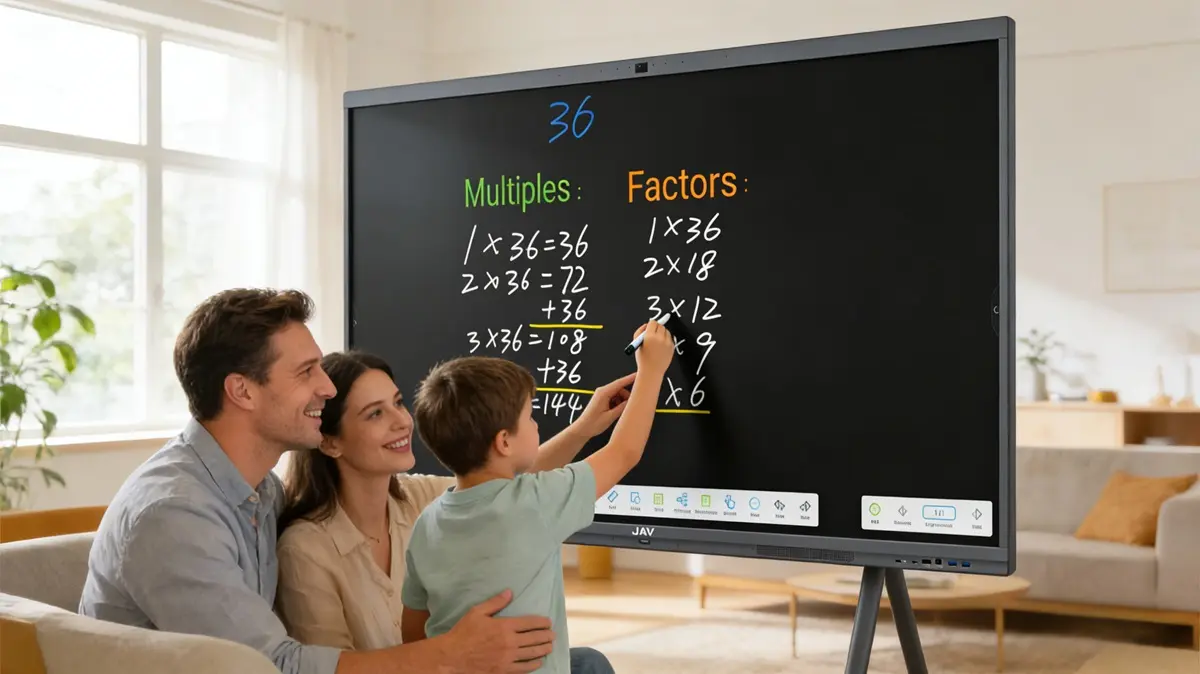
An interactive display functions as the central digital hub in a corporate training room. Unlike conventional projectors or static monitors, it supports touch interaction, real-time annotation, and multi-device collaboration.
With platforms like the JAV Board 10 interactive display, trainers can:
- Share content from laptops or mobile devices instantly via screen sharing
- Run collaborative exercises using a digital whiteboard
- Record training sessions using an integrated AI camera for asynchronous learning
This infrastructure supports instructor-led workshops, peer-to-peer learning, and hybrid training programs with consistent user experience.
Enhancing Engagement with Interaction on the Interactive Display
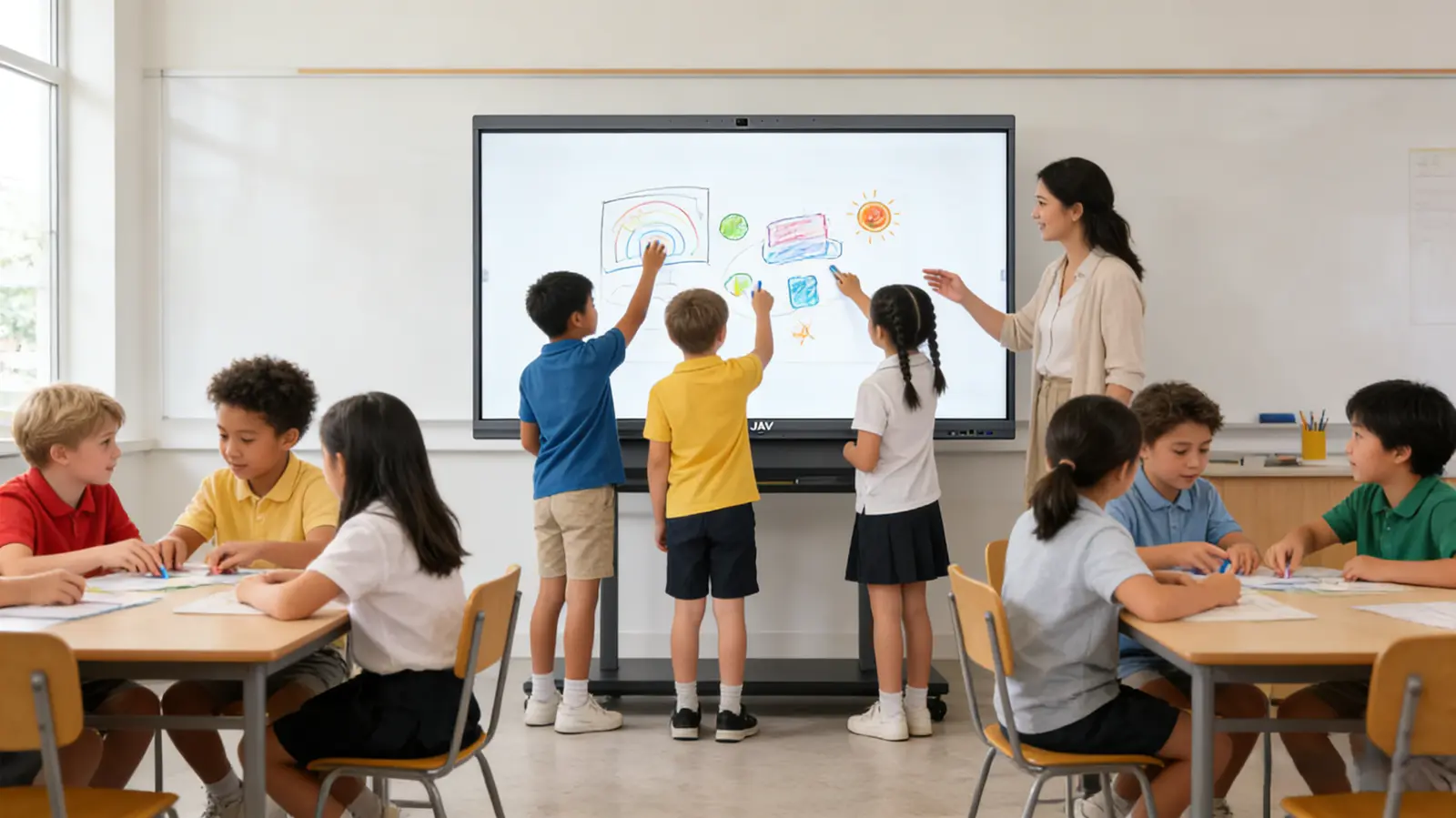
Engagement is a key predictor of training effectiveness. Interactive displays enable hands-on participation through touch-based annotation, collaborative brainstorming, and live problem-solving exercises.
During corporate workshops, trainers can use the digital whiteboard to:
- Map workflows and processes visually
- Conduct interactive quizzes and polls
- Facilitate group ideation sessions in real time
By allowing learners to physically interact with training content, the interactive display increases cognitive engagement and knowledge retention compared to slide-based presentations.
Improving Hybrid Training with Screen Sharing and Collaboration
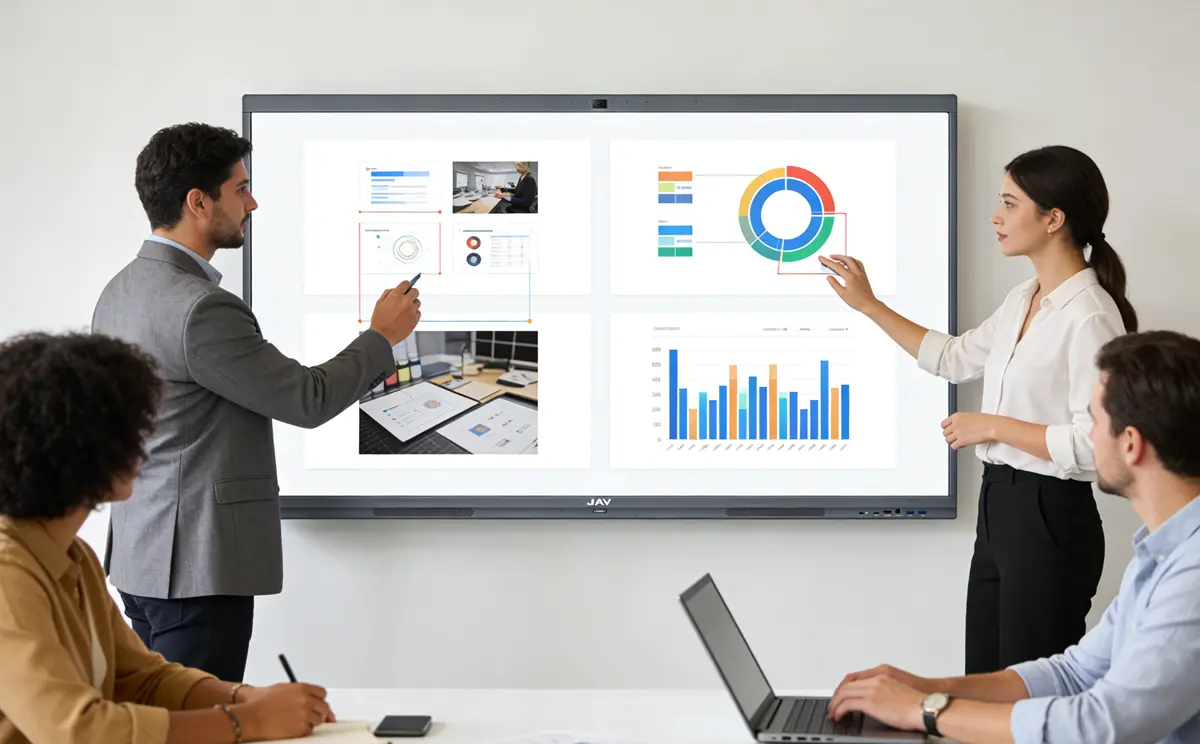
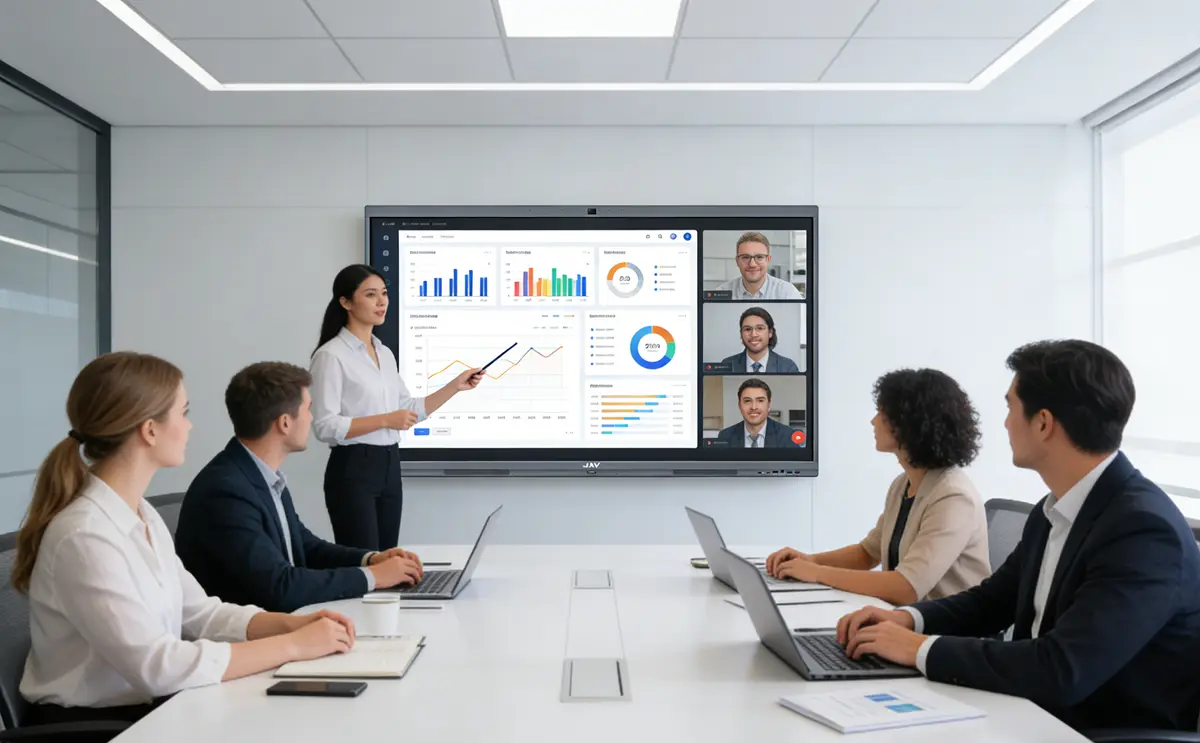
Hybrid corporate training requires equal participation from in-room and remote learners. Interactive displays like the JAV Board 10 support screen sharing from multiple devices, enabling trainers and participants to present content seamlessly.
In a hybrid training scenario, trainers can:
- Display remote participants’ screens directly on the interactive display
- Annotate shared content in real time
- Enable collaborative editing of training materials
This reduces the gap between in-person and remote employees and ensures that hybrid learners actively contribute rather than passively consume content.
Recording Corporate Training with AI Camera Technology
Content scalability is a major priority for corporate L&D teams. An integrated AI camera allows trainers to record sessions automatically, capturing both the instructor and the interactive display content.
Recorded sessions can be reused for:
- Onboarding new hires
- Compliance training documentation
- Microlearning content libraries
- Performance review and knowledge audits
This capability turns live training sessions into reusable digital assets, reducing long-term training costs and increasing knowledge accessibility.
Interactive Display as a Strategic L&D Infrastructure Investment
For corporate training organizations, an interactive display is not just a presentation device—it is part of the learning technology stack. When integrated with LMS platforms, collaboration software, and cloud storage, smart boards become a central node in corporate knowledge delivery.
Key benefits for L&D teams include:
- Higher training engagement metrics
- Improved knowledge retention and assessment results
- Scalable training content creation
- Enhanced hybrid workforce collaboration
From onboarding programs to leadership development workshops, interactive displays support enterprise-scale learning initiatives with measurable ROI.
Conclusion: Future-Proofing Corporate Training Rooms
As corporate learning strategies shift toward hybrid, collaborative, and data-driven models, training room infrastructure must evolve accordingly. An interactive display such as JAV Board 10 enables corporate L&D teams to modernize training environments, improve learner engagement, and extend training impact beyond the classroom.
By integrating screen sharing, digital whiteboard collaboration, and AI-powered recording, interactive displays transform corporate training rooms into intelligent learning hubs—supporting continuous employee development in a distributed workforce era.