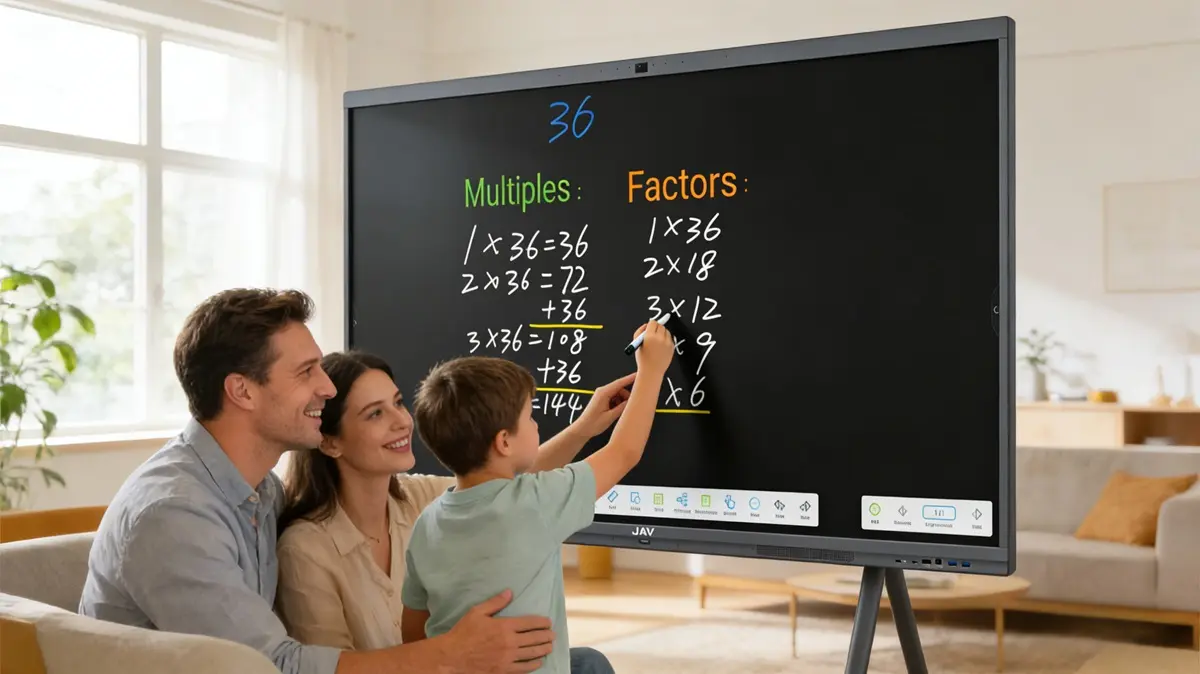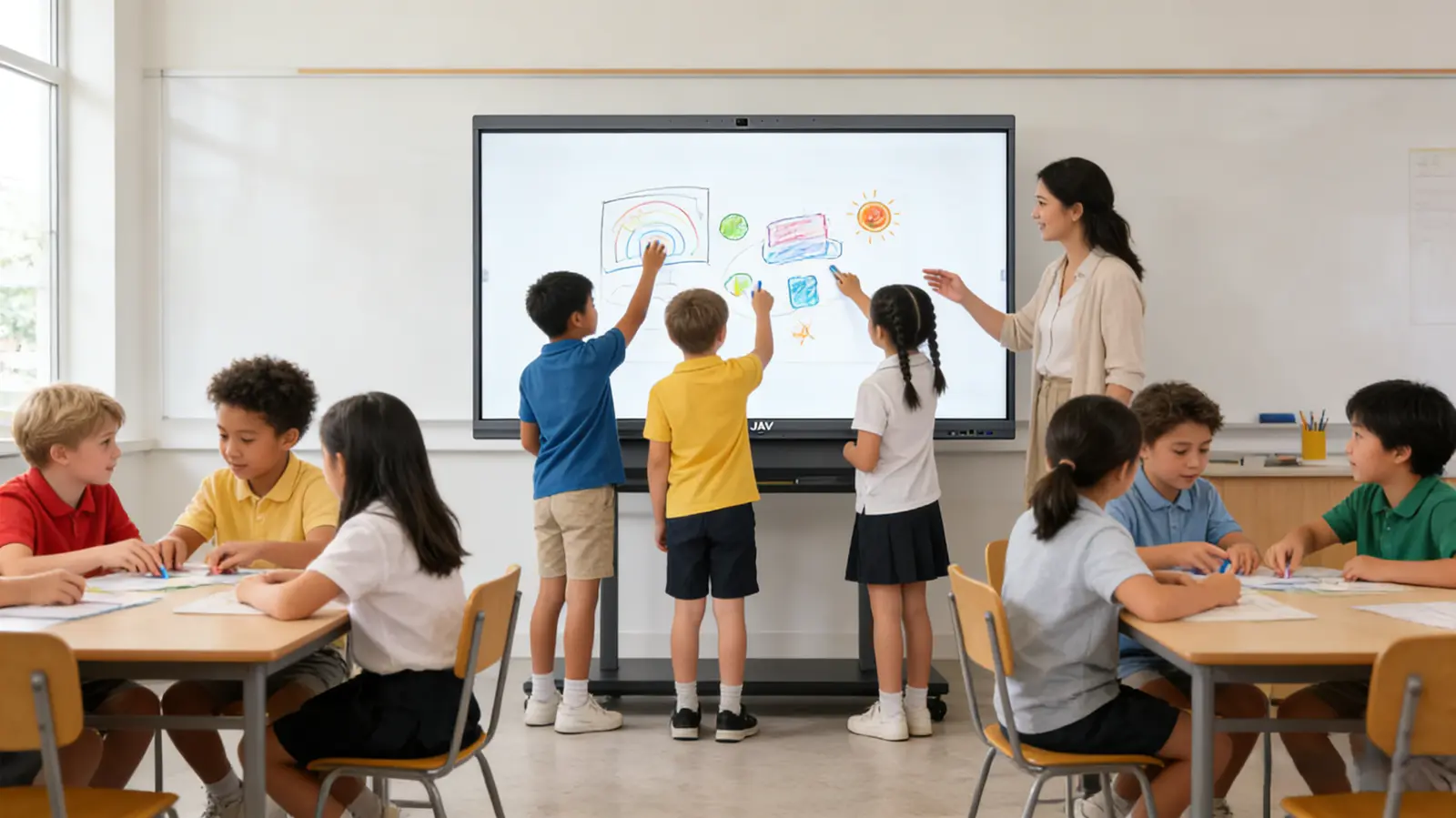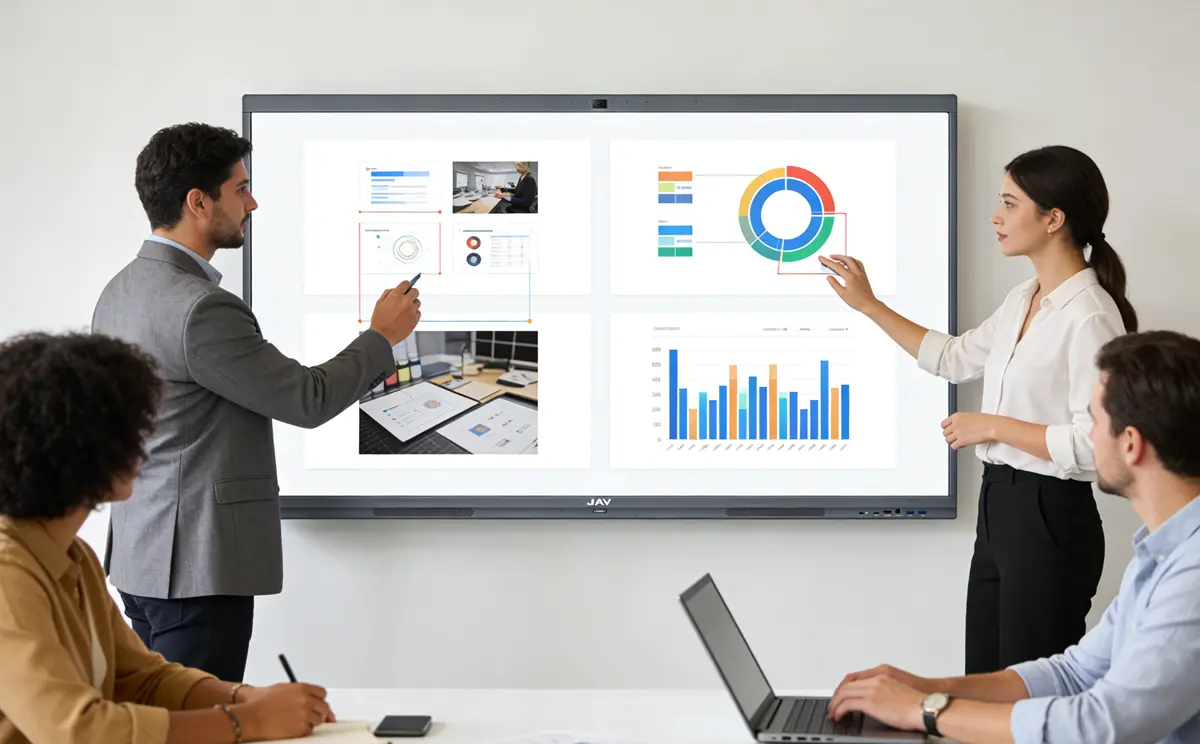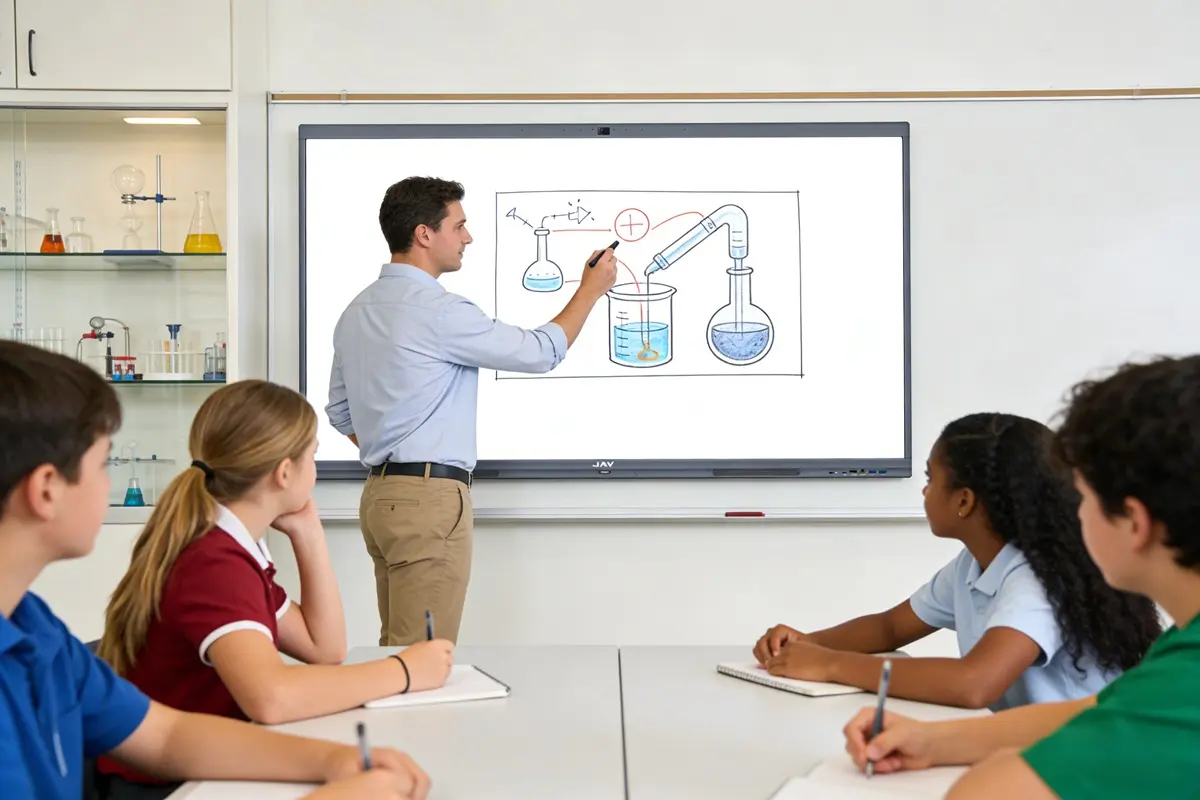
Hybrid learning has become a long-term reality across K–12 schools, universities, and professional training environments. As teaching moves between physical classrooms and digital spaces, educators need tools that can support both without increasing complexity. In this context, a smart board for teaching is no longer optional—it is foundational to delivering consistent, engaging hybrid instruction.
What is A Smart Board for Teaching
A smart board for teaching is an interactive display that enables educators to present, annotate, and share lesson content with both in-person and remote students in real time. In hybrid learning classrooms, smart boards act as a unified teaching surface, ensuring consistent instruction, student engagement, and seamless collaboration across physical and digital learning environments.
Traditional teaching tools were designed for single-location classrooms. In hybrid settings, they often create gaps between in-person and remote learners. A modern smart board helps close this gap by unifying content delivery, interaction, and collaboration on one shared teaching surface.
Why Hybrid Learning Demands a Smart Board for Teaching
Hybrid classrooms require teachers to manage multiple variables at once: live discussion, digital content, remote participants, and lesson pacing. Without the right tools, this can quickly become fragmented.
A smart board for teaching allows educators to present, annotate, and interact with learning materials in real time while ensuring that everything on the board is visible to both in-class and remote students. This shared visual workspace helps maintain instructional continuity and reduces the need for separate workflows.
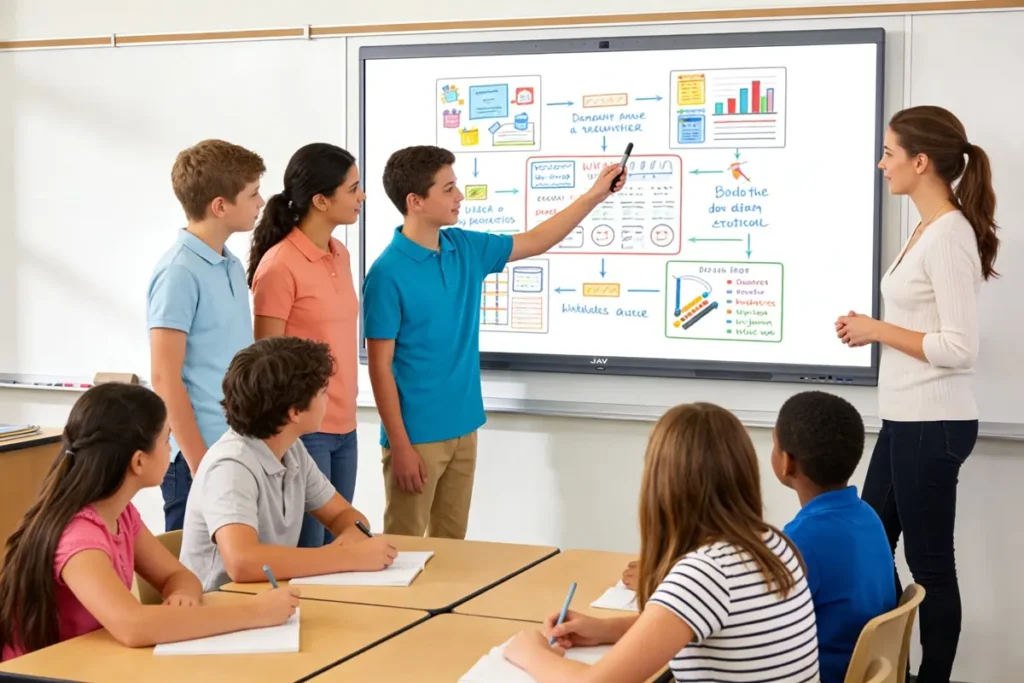
From Concept to Practice: Smart Boards for Classroom Use
While the value of smart boards is clear in theory, effective hybrid learning depends on how these tools function in real classrooms. A practical smart board for classroom use must support everyday teaching scenarios, not just advanced demonstrations.
This is where purpose-built classroom solutions come into play. Smart boards for classroom environments need to combine ease of use, reliability, and compatibility with existing teaching platforms. When these conditions are met, teachers can shift their focus back to pedagogy rather than technology.
Introducing the JAV Board 10 Smart Board in Hybrid Classrooms
Within this context, there’s the JAV Board 10 Smart Board which is designed to support the practical demands of hybrid teaching. Rather than acting as a standalone display, it functions as an integrated smart board for teaching that aligns with real classroom workflows.
The JAV Board 10 enables teachers to write and annotate directly on lesson materials, share screens wirelessly, and integrate with video conferencing tools—all from a single device. This makes it easier to transition between in-person explanation and remote interaction without interrupting lesson flow.
Smart Board in Classroom: Improving Student Engagement
One of the biggest challenges in hybrid learning is ensuring that remote students remain active participants. A smart board in classroom settings helps address this challenge by enabling shared interaction.
With the JAV Board 10, teachers can invite students to contribute to discussions, annotate shared content, or present their work on the board. Because all interactions occur on a centralized display, both in-class and remote learners can follow and engage at the same pace.
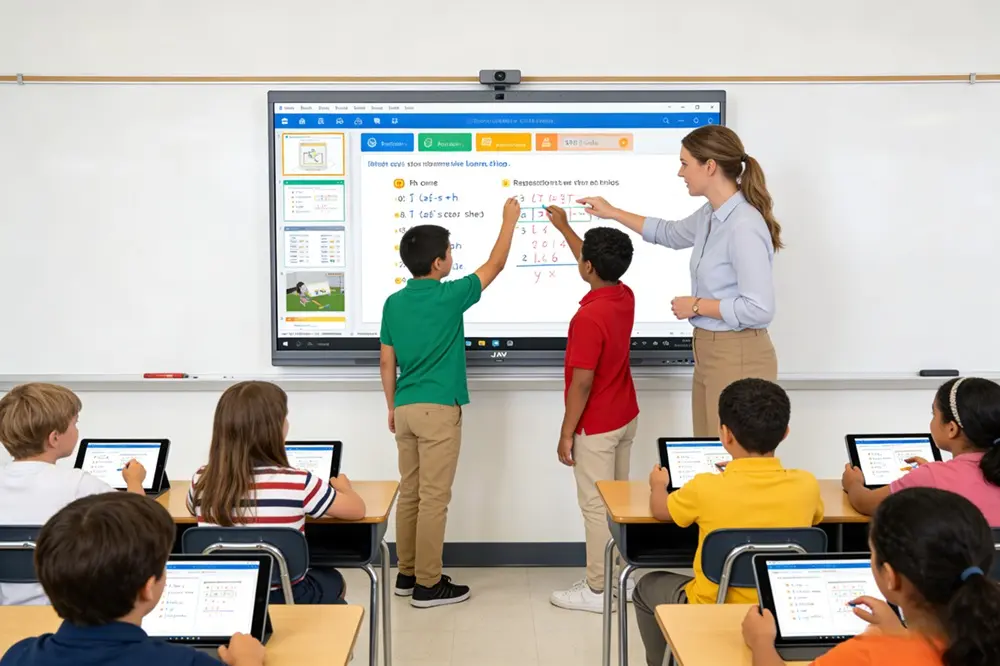
Interactive Whiteboard for Classroom: Supporting Dynamic Instruction
An interactive whiteboard for classroom instruction supports teaching methods that are more visual and collaborative. Using the JAV Board 10, educators can:
- Annotate PDFs, images, and web content in real time
- Save and share lesson notes for later review
- Record lessons to support asynchronous learning
- Switch seamlessly between teaching materials
These features are especially valuable in hybrid learning environments, where flexibility and content accessibility are essential.
Interactive Whiteboards in the Classroom: A Long-Term Teaching Asset
Beyond immediate hybrid needs, interactive whiteboards in the classroom offer long-term value for digital education strategies. The JAV Board 10 supports blended learning, flipped classrooms, and collaborative lesson design, making it a scalable solution as teaching models continue to evolve.
Conclusion
Hybrid learning requires tools that connect students, content, and instruction into a unified experience. A smart board for teaching provides this foundation, and when implemented through a classroom-ready solution like the JAV Board 10 Smart Board, it becomes a powerful enabler of modern education. By adopting interactive whiteboards in the classroom, schools can deliver engaging, consistent learning experiences—regardless of where students are learning from.
Upgrade your hybrid classroom with the JAV Board 10 Smart Board and discover how a smart board for teaching can improve engagement, collaboration, and learning outcomes in hybrid environments.
Frequently Asked Questions About Smart Boards for Teaching
What is a smart board for teaching?
A smart board for teaching is an interactive whiteboard that allows educators to display digital content, write or annotate directly on the screen, and share lessons with students in real time. It is commonly used to support interactive and hybrid classroom instruction.
How does a smart board support hybrid learning?
A smart board supports hybrid learning by creating a shared visual workspace for both in-class and remote students. Teachers can present materials, annotate lessons, and interact with learners regardless of location, ensuring continuity and equal participation.
What is the difference between a smart board and an interactive whiteboard?
A smart board typically refers to a complete interactive display system with built-in software and connectivity, while an interactive whiteboard may rely on external devices such as projectors or computers. Both enable touch interaction, but smart boards are more integrated and classroom-ready.
Are smart boards effective for classroom teaching?
Yes, smart boards are effective for classroom teaching because they increase student engagement, support visual learning, and enable collaborative instruction. They are especially valuable in hybrid classrooms where lessons must reach both in-person and remote learners simultaneously.
Can smart boards be used for both K–12 and higher education?
Smart boards can be used across K–12 schools, universities, and professional training environments. Their flexibility supports a wide range of teaching styles, subjects, and classroom sizes.