Project-Based Learning (PBL) has become an important approach in STEM education because it helps students learn through real-world problem solving, teamwork, experimentation, and presentation. Instead of only memorizing theories, students apply science, technology, engineering, and math concepts to meaningful projects.
To make PBL effective, teachers need more than textbooks and traditional classroom equipment. The right STEM teaching tools can help students research ideas, visualize complex concepts, collaborate with teammates, test solutions, and present their work clearly.
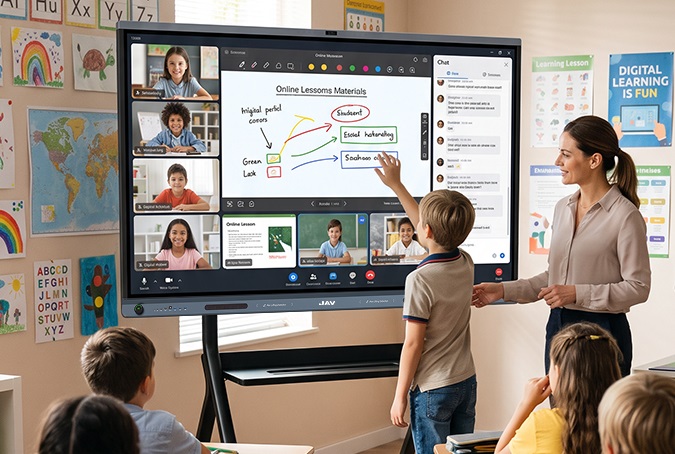
Among different STEM teaching tools, interactive whiteboards have become especially useful in modern classrooms. They combine digital whiteboarding, touch interaction, multimedia display, wireless sharing, and group collaboration in one platform, making them a practical tool for project-based STEM learning.
What Is Project-Based Learning in STEM Education?
Project-Based Learning is a student-centered teaching method where students gain knowledge and skills by working on extended projects. In STEM classrooms, these projects often require students to investigate a problem, design a solution, test ideas, and explain their results.
Common STEM PBL activities include building robots, designing bridges, creating coding projects, conducting science experiments, developing mathematical models, or solving environmental challenges.
Unlike traditional lectures, PBL asks students to take an active role in learning. They need to ask questions, collect information, discuss ideas, make decisions, and present their findings. This makes collaboration, visualization, and communication essential parts of the learning process.
Why PBL Requires the Right STEM Teaching Tools
Project-based learning usually includes several stages: research, brainstorming, design, testing, refinement, and presentation. Each stage requires students to work with information in different ways.
During research, students need access to digital resources, videos, diagrams, websites, and project data. During brainstorming, they need space to share ideas and organize thoughts. During design, they need to sketch models, compare solutions, and map out workflows. During testing, they need to record results and identify problems. During presentation, they need to explain their work clearly to classmates and teachers.
Traditional whiteboards can support basic writing, but they are limited when students need multimedia content, real-time collaboration, saved notes, or digital project sharing. Modern STEM teaching tools help bridge this gap by giving teachers and students a more flexible learning environment.
How Interactive Whiteboards Support Each Stage of PBL
1. Research and Planning
At the beginning of a STEM project, students often need to explore background information, watch videos, review diagrams, and collect data. An interactive whiteboard allows teachers and students to display online resources, project guidelines, reference images, and research notes on a large shared screen.
For example, during an environmental science project, students can compare climate data, view maps, and highlight key information directly on the board. This helps the whole group stay focused and work from the same information.
2. Collaborative Brainstorming
Brainstorming is one of the most important stages of project-based learning. Students need to generate ideas, discuss possibilities, and organize different viewpoints.
Interactive whiteboards support this process through multi-touch collaboration, digital sticky notes, mind maps, sketches, and real-time annotation. Instead of one student writing while others watch, multiple students can contribute at the same time.
This makes group discussion more active and helps students build communication, creativity, and problem-solving skills.
3. Design and Visualization
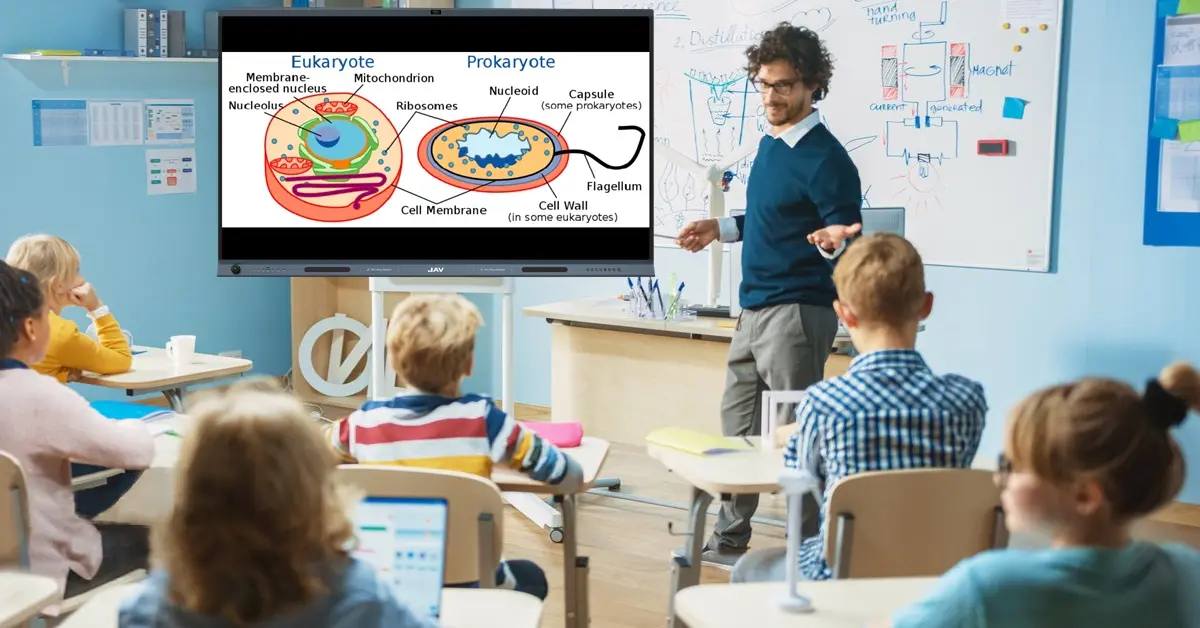
Many STEM projects involve abstract ideas that are difficult to understand through text alone. Engineering structures, coding logic, scientific systems, and mathematical models often become clearer when students can see and manipulate visual content.
With an interactive whiteboard, students can draw prototypes, label diagrams, compare design options, or map coding workflows. A team designing a bridge, for example, can sketch different structures on the screen and discuss which design may be stronger or more efficient.
This visual approach helps students connect theory with real-world application.
4. Testing and Refinement
PBL is not only about creating a final product. It also teaches students how to test, evaluate, and improve their ideas.
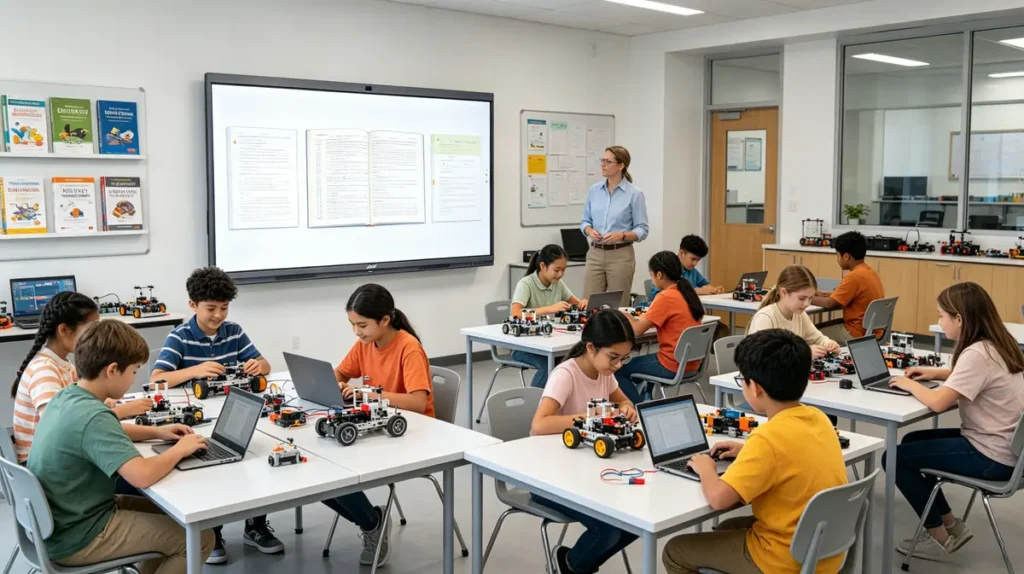
Interactive whiteboards give students a central workspace to record test results, mark problems, compare versions, and track changes. In a robotics project, students can display their robot design, map the coding logic, record test results, and annotate what needs to be improved after each trial.
This makes the project workflow more organized and helps students understand that failure and improvement are part of the STEM learning process.
5. Project Presentation
Presentation is a key part of project-based learning. Students need to explain their process, defend their choices, and communicate technical information clearly.
Interactive whiteboards help students present slides, videos, data charts, prototype images, and final results on a large display. They can also annotate their presentation in real time when answering questions or explaining design decisions.
This helps students develop confidence and communication skills, which are important for future STEM study and careers.
Practical Example: Robotics Project in a STEM Classroom
Consider a classroom robotics project where students need to design and program a robot to complete a task.
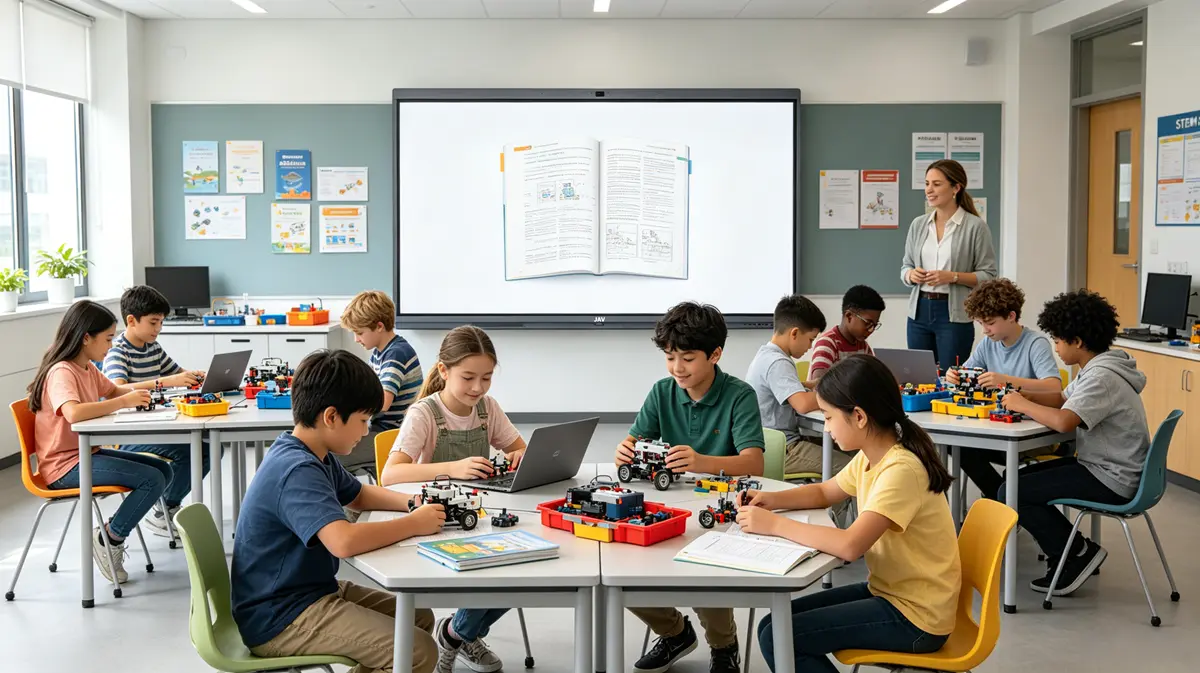
Using an interactive whiteboard, students can research robot structures, sketch mechanical designs, map coding logic, compare sensor options, record test results, and present their final solution. The display becomes a shared project workspace where students can see the full process from idea to result.
This type of classroom experience closely reflects how engineers and technology teams work in real professional environments. Students are not only learning STEM knowledge; they are also learning how to collaborate, solve problems, and communicate ideas.
How to Choose STEM Teaching Tools for Project-Based Learning
When schools choose STEM teaching tools, they should consider how well the tools support daily classroom activities and long-term learning goals.
A good STEM teaching tool should support collaboration, visual learning, multimedia resources, student presentations, and flexible classroom use. It should also be easy for teachers to operate, so technology does not interrupt the lesson.
For project-based learning, schools should look for tools that allow students to brainstorm together, display project materials, annotate ideas, save lesson content, and share work across devices. Compatibility with digital learning platforms, wireless screen sharing, and cloud-based resources can also make classroom projects easier to manage.
The best STEM teaching tools are not only advanced in technology. They should help teachers guide students through the full learning process, from asking questions to presenting final results.
How JAV Board Supports STEM Project-Based Learning
For schools looking for a practical STEM teaching tool, مجلس جاف provides an all-in-one interactive display designed for modern classrooms.
During brainstorming, students can use multi-touch interaction and digital whiteboarding to share ideas, draw sketches, and organize project plans. During research and design, teachers and students can use wireless screen sharing to display websites, videos, diagrams, and project documents. During testing and refinement, annotation tools help teams record observations, compare results, and improve their designs. During final presentations, the 4K display helps students present their work clearly and professionally.
JAV Board also supports multimedia teaching, interactive whiteboarding, and flexible classroom collaboration. Instead of using separate devices for display, whiteboarding, screen sharing, and presentation, teachers can manage STEM project activities from one central platform.
This makes JAV Board a useful choice for STEM classrooms that want to make project-based learning more visual, collaborative, and efficient.
FAQ About STEM Teaching Tools and PBL
What are STEM teaching tools?
STEM teaching tools are classroom technologies and resources that help teachers deliver science, technology, engineering, and math lessons more effectively. They can include interactive whiteboards, coding kits, robotics tools, science sensors, digital simulations, and collaboration platforms.
Why are STEM teaching tools important for project-based learning?
Project-based learning requires students to research, collaborate, design, test, and present ideas. STEM teaching tools support these activities by making learning more visual, hands-on, and collaborative.
How do interactive whiteboards support STEM learning?
Interactive whiteboards support STEM learning by allowing students to brainstorm ideas, visualize complex concepts, annotate diagrams, share digital resources, and present project results on a large interactive screen.
Can interactive whiteboards be used for robotics or engineering projects?
Yes. Interactive whiteboards are useful for robotics and engineering projects because students can sketch designs, map coding logic, compare test results, and present final solutions in one shared workspace.
What should schools consider when choosing STEM teaching tools?
Schools should consider ease of use, collaboration features, multimedia support, compatibility with digital resources, wireless sharing, durability, and how well the tool supports different stages of project-based learning.
خاتمة
Project-Based Learning helps students develop problem-solving, collaboration, creativity, and communication skills through real-world STEM activities. To support this teaching approach, schools need STEM teaching tools that make learning more interactive, visual, and organized.
Interactive whiteboards are especially valuable because they support every stage of PBL, from research and brainstorming to design, testing, and presentation.
With an all-in-one interactive display like JAV Board, teachers can create a more connected STEM classroom where students do not just learn concepts—they explore, build, test, and share their ideas with confidence.