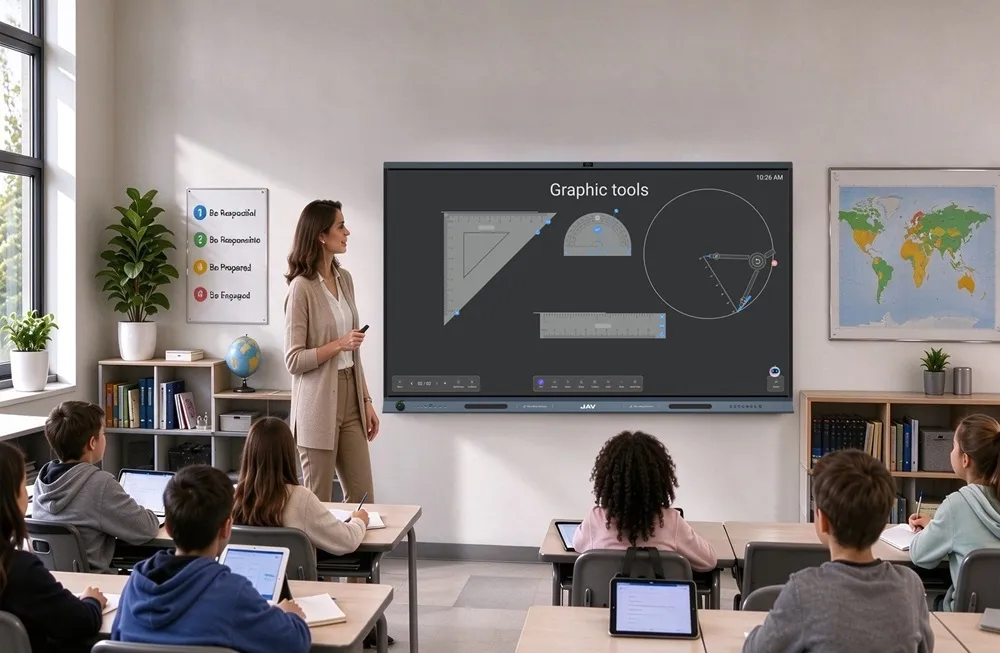
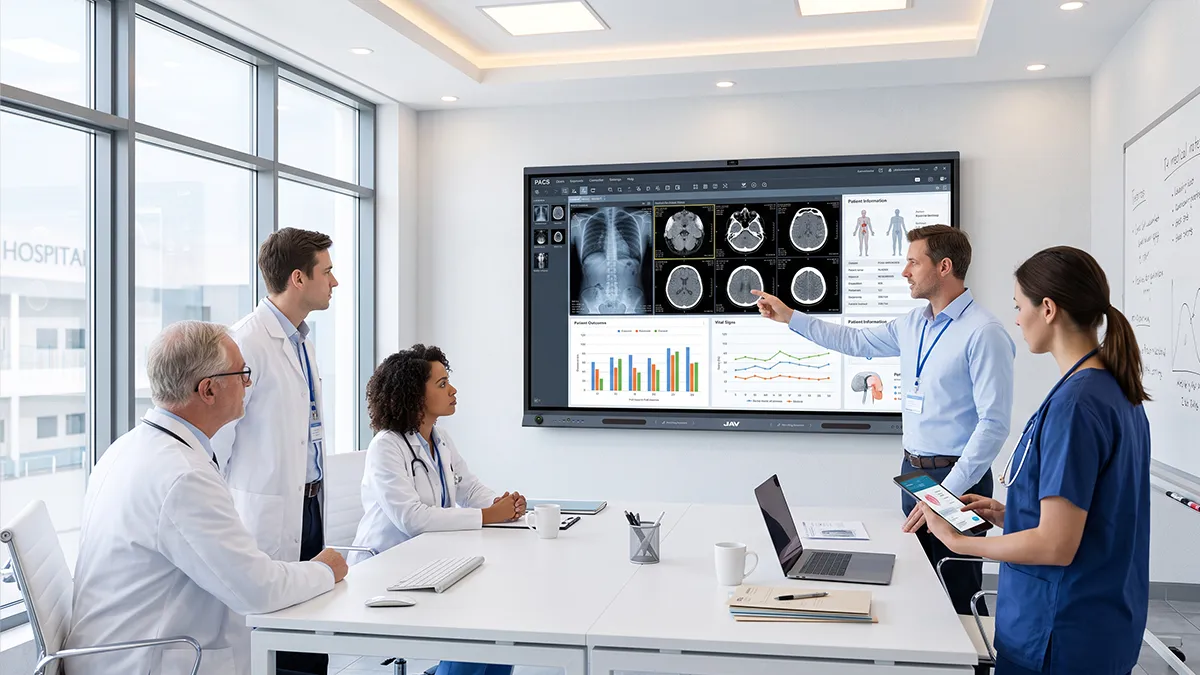
A meeting room display system is an integrated workplace display solution that combines visual presentation, wireless screen sharing, video conferencing, digital whiteboarding, and collaboration tools in one platform.
As businesses continue to embrace hybrid work and digital collaboration, choosing the right meeting room display system has become increasingly important. A modern conference room requires more than a large screen for presentations. Companies need a complete solution that supports content sharing, team collaboration, video communication, and efficient meeting workflows.
When evaluating a conference room display solution, businesses should consider several key factors, including display quality, collaboration features, audio and video capabilities, software compatibility, and AI-powered functions. This guide explains the essential features to look for when selecting a meeting room display system in 2026.
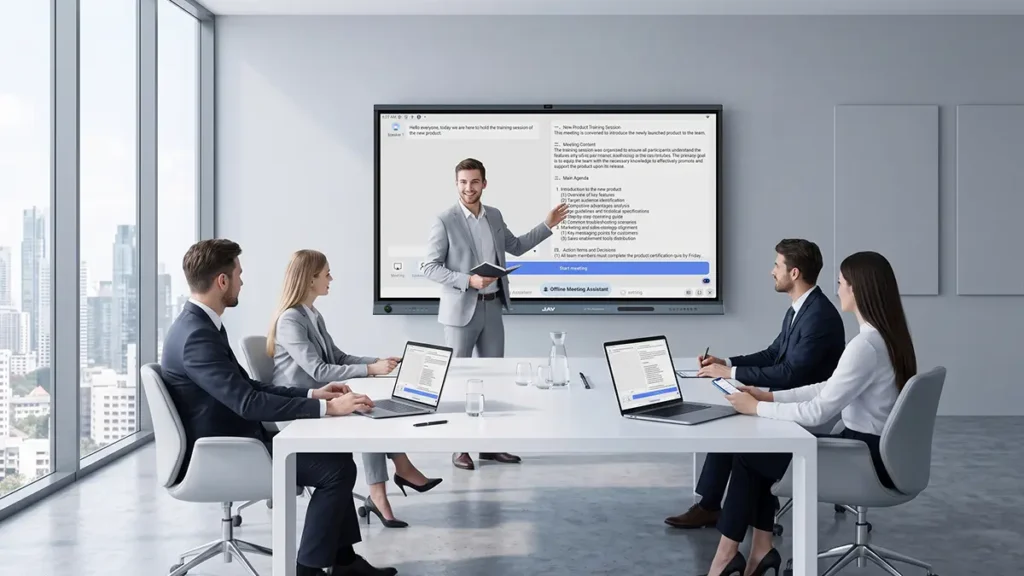
1. Display Quality: Ensure Clear and Comfortable Viewing
The display is the foundation of any meeting room solution. A high-quality screen helps participants clearly view presentations, documents, videos, and other shared content.
When choosing a meeting room display system, businesses should consider:
4K Resolution:
A 4K UHD display provides sharper images and more detailed visuals, which is especially important for reviewing documents, data dashboards, product designs, and professional presentations.
Anti-Glare Screen:
Conference rooms often have different lighting conditions. An anti-glare screen reduces reflections and improves viewing comfort, allowing participants to focus on meeting content.
Screen Size:
The ideal screen size depends on the meeting room layout, viewing distance, and number of participants. Larger displays are often better suited for conference rooms, training rooms, and executive meeting spaces.
2. Collaboration Features: Support More Interactive Meetings
Modern meetings are no longer limited to one-way presentations. Teams need tools that allow participants to share ideas, discuss content, and collaborate efficiently.
A good meeting room display system should include:
Wireless Screen Sharing:
Wireless sharing allows employees to connect devices quickly without complicated cables, making meetings easier to start and manage.
Digital Whiteboard:
A built-in whiteboard enables teams to brainstorm, annotate documents, and visualize ideas directly on the display.
Multi-User Interaction:
Multi-touch capabilities allow multiple participants to interact with the screen at the same time, improving teamwork during discussions and workshops.
3. Audio and Video Capabilities: Improve Hybrid Meeting Experiences
With hybrid work becoming a standard practice, clear communication between in-room and remote participants is essential.
Businesses should evaluate:
Camera Quality:
A high-resolution camera helps remote participants clearly see meeting attendees. Features such as auto-framing and speaker tracking can further improve communication.
Microphone Performance:
A quality microphone system should capture voices clearly across the meeting room while reducing background noise.
Speaker Quality:
Powerful and clear speakers ensure that remote participants and shared media can be heard effectively.
4. Software Ecosystem: Consider Long-Term Usability
Hardware specifications are important, but software determines how well a meeting room display system fits into daily workflows.
Companies should look for:
- A reliable operating system that supports business applications
- Strong security features for enterprise use
- Compatibility with commonly used collaboration and productivity tools
A flexible software ecosystem helps businesses maximize the value of their investment and adapt to future workplace needs.
5. AI Features: The Future of Meeting Room Display Systems
AI is becoming an important trend in modern conference room technology. The next generation of meeting room display systems can do more than display information—they can also help manage meeting tasks.
Important AI features include:
AI Meeting Summary:
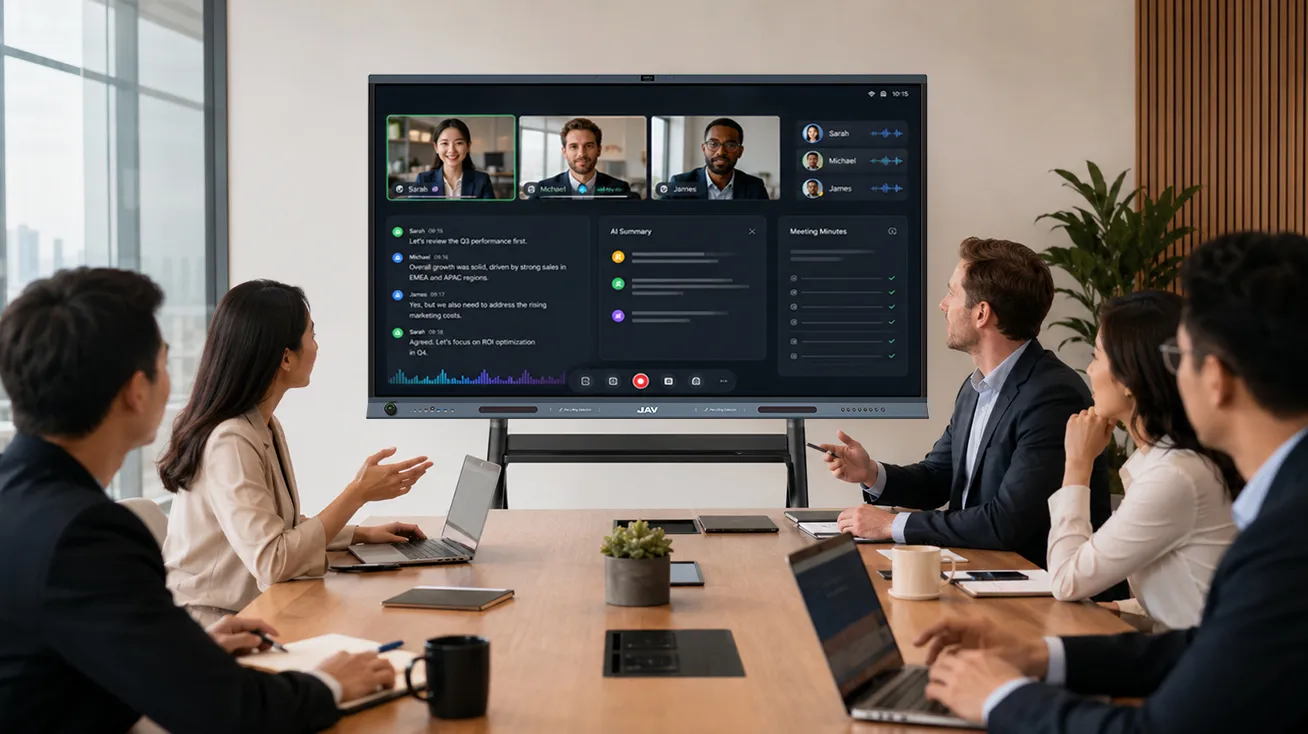
AI-powered meeting summaries can automatically capture discussions, organize key points, and reduce the time employees spend taking notes.
Real-Time Translation:
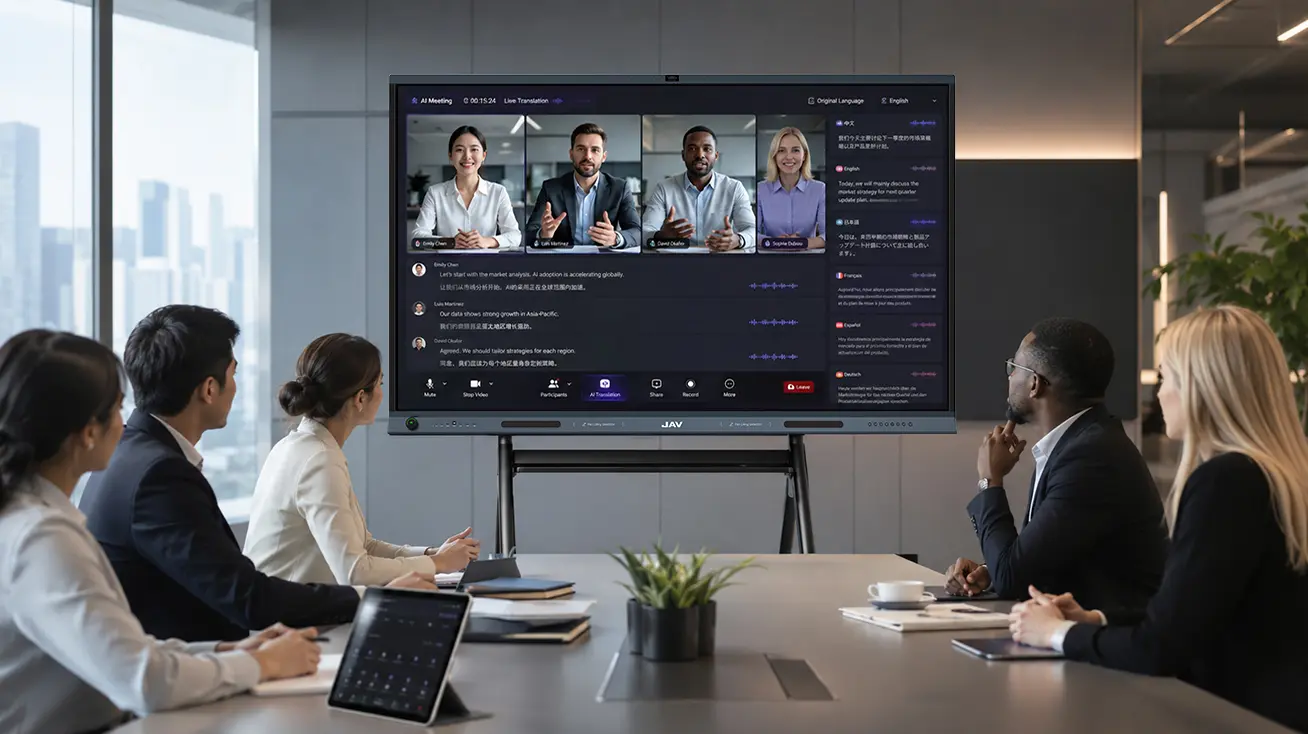
AI translation helps global teams communicate more effectively by reducing language barriers during international meetings.
Intelligent Voice Processing:
Advanced speech recognition and voice technologies improve meeting accuracy and efficiency.
JAV Board 19: A Meeting Room Display System Designed for Modern Workplaces
After understanding the key factors of a high-quality meeting room display system, businesses can evaluate whether a solution combines these capabilities in one platform.
JAV Board 19 integrates the essential features required for modern conference rooms, including a 4K large-format display, interactive whiteboard, wireless screen sharing, professional audio and video capabilities, and AI-powered collaboration tools.
It supports different business scenarios with:
- Clear visual experience through 4K display and large screen options
- Efficient collaboration through interactive whiteboarding and wireless sharing
- Hybrid communication with dual cameras and a 12-microphone array
- Smart meeting management through AI Meeting Minutes and real-time translation
With AI Meeting Minutes, JAV Board 19 can recognize speech, generate meeting summaries, and help teams review important information after discussions, reducing manual note-taking and improving meeting efficiency.
Choosing the Right Meeting Room Display System
Selecting the right meeting room display system requires more than comparing product specifications. Businesses should focus on how the solution improves collaboration, communication, and productivity.
By evaluating display quality, collaboration features, audio and video performance, software flexibility, and AI capabilities, organizations can choose a conference room solution that meets both current needs and future workplace requirements.