In design-driven industries such as architecture, interior design, engineering, and construction, an interactive display is increasingly becoming a core infrastructure tool for reducing miscommunication and improving project outcomes. Even a minor misunderstanding in design intent can lead to schedule delays, budget overruns, and costly rework.
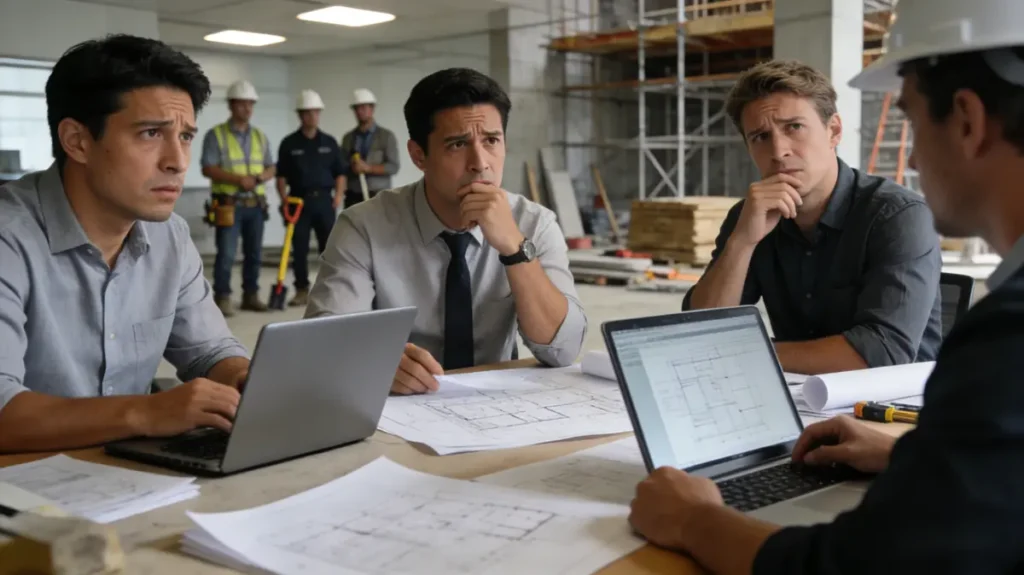
As project complexity increases and teams become more distributed, traditional communication methods are no longer sufficient. Interactive displays now function as advanced project communication tools, enabling teams to visualize, annotate, and align design decisions in real time.
The Hidden Cost of Design Miscommunication
Most design projects do not fail due to technical limitations. Instead, failures often originate from inconsistent interpretation among stakeholders.
A common workflow might look like this:
- A designer sends a floor plan or 3D model via PDF
- A client provides feedback verbally in a virtual meeting
- A contractor interprets the revised drawings differently
- Construction proceeds based on misaligned assumptions
By the time errors are detected, materials may already be ordered, labor scheduled, and timelines disrupted. Industry research suggests that miscommunication can account for 5–15% of total project costs, particularly in commercial architecture and interior design projects.
Static documents, fragmented collaboration platforms, and long email threads cannot provide the visual clarity needed for high-stakes design decisions.
Interactive Displays as Strategic Project Communication Tools
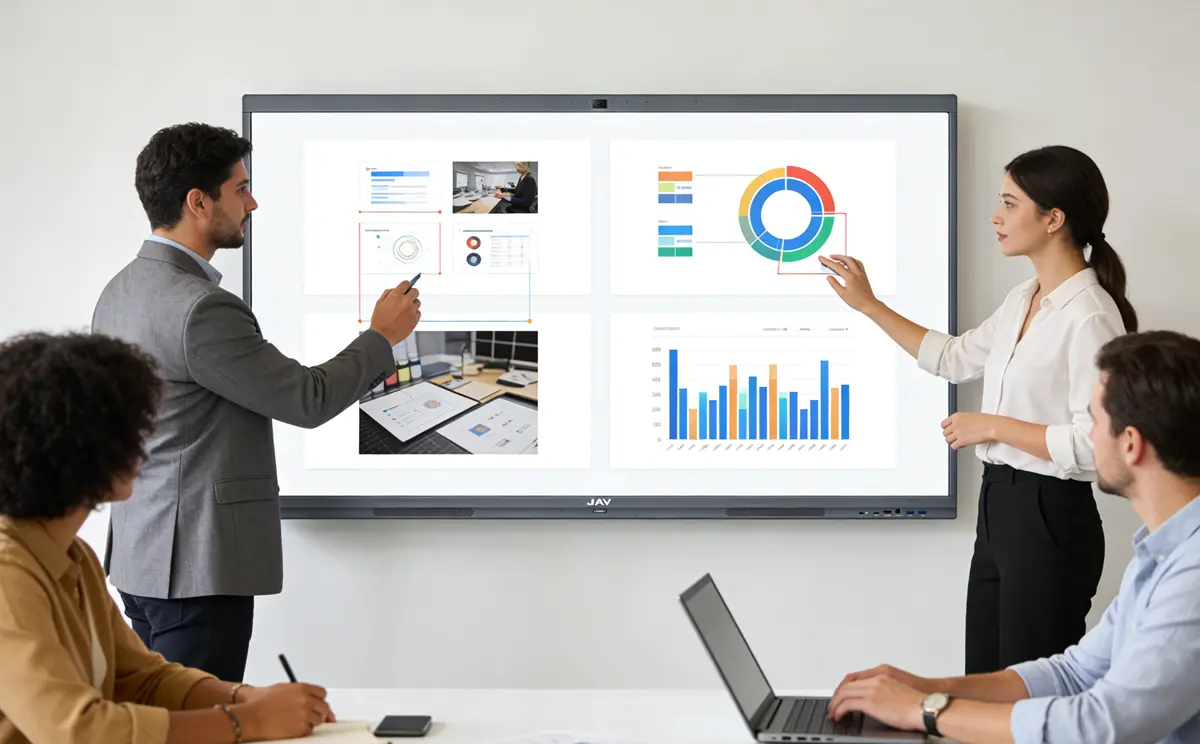
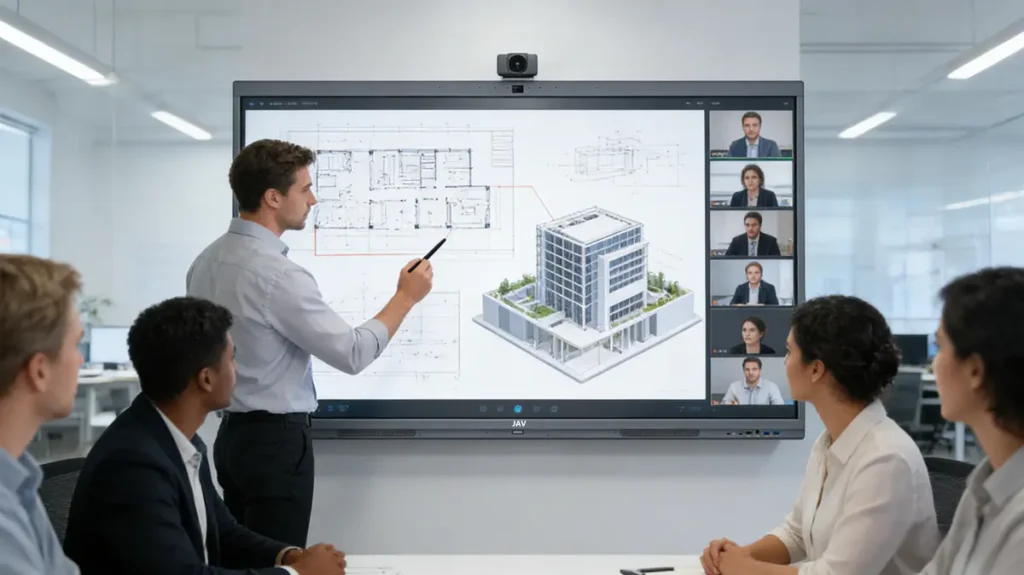
An interactive display changes collaboration dynamics by turning passive review sessions into active design workshops. Stakeholders can interact directly with plans, models, and documents—reducing ambiguity and accelerating decision-making.
A typical interactive display, like the JAVボード10, is designed to support professional design workflows by serving as a centralized collaboration platform.
Real-Time Visual Collaboration
With a large-format interactive display, teams can:
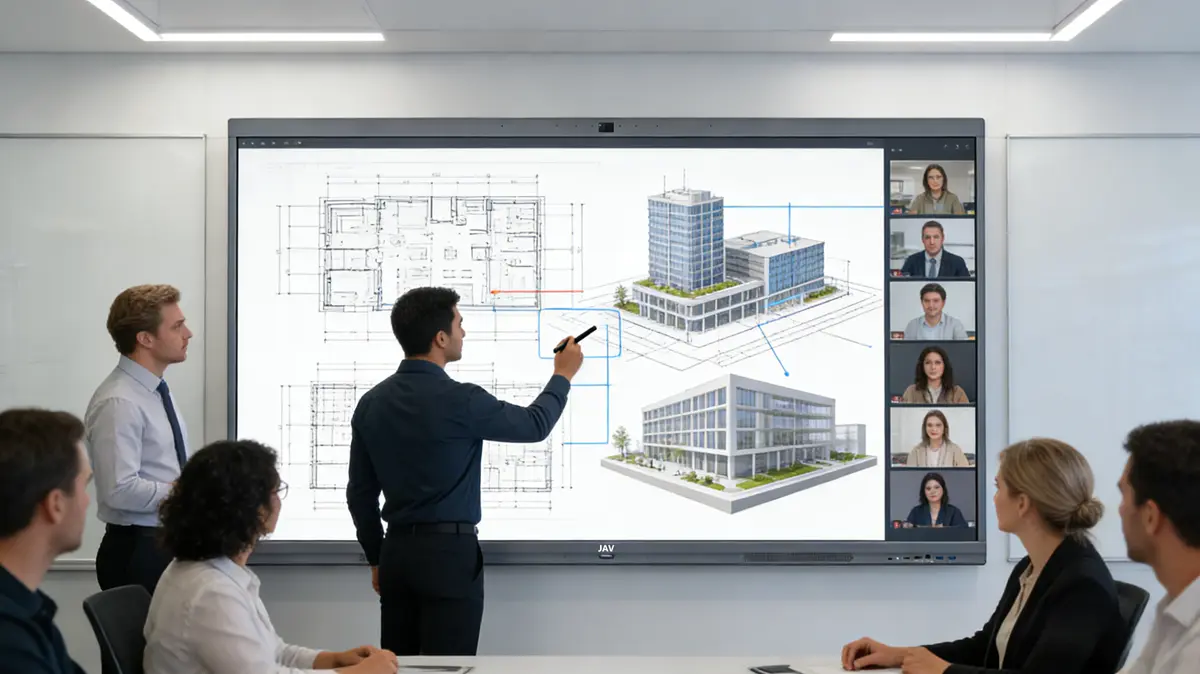
- Annotate architectural drawings and blueprints directly on-screen
- Highlight structural or spatial concerns during meetings
- Compare multiple design iterations side-by-side
- Capture client feedback visually instead of relying on handwritten notes
This shared visual context ensures every participant interprets the same information simultaneously, significantly reducing misalignment.
Seamless Integration with Design Software
Design teams rely on software such as AutoCAD, Revit, SketchUp, and Adobe Creative Suite. A professional interactive display must integrate smoothly into this ecosystem.
The JAV interactive display supports direct file access and collaboration tools through its certified Android environment and enterprise-grade hardware. Teams can open, review, and annotate files without external PCs or complex cabling, minimizing technical friction during critical discussions.
Collaboration Across Hybrid Teams
Modern design projects often involve remote architects, on-site engineers, and international clients. Interactive displays support wireless screen sharing and real-time collaboration, enabling distributed teams to review the same visual content simultaneously.
Remote participants can see annotations, markups, and changes instantly, reducing the risk of conflicting interpretations between office and construction site teams.
Measurable Outcomes: Faster Decisions and Lower Project Risk with an Interactive Display
When an interactive display becomes part of the project communication infrastructure, the benefits are measurable and operationally significant.
Reduced Rework and Change Orders
Visual validation in early design phases prevents misunderstandings that typically surface during construction. Aligning expectations early reduces costly late-stage design changes.
Faster Client Approvals
Clients often struggle to interpret technical drawings. Interactive visualization, live annotations, and side-by-side comparisons improve comprehension, accelerating approval cycles and reducing revision loops.
Improved Cross-Team Alignment
Designers, engineers, and contractors share a single visual reference point. This unified understanding minimizes conflicting interpretations and improves execution accuracy.
Increased Project Efficiency
By eliminating repeated clarification meetings and reducing design errors, teams shorten project timelines and improve overall profitability.
Why the JAV Board 10 Interactive Display Is Optimized for Design Collaboration
The JAV Board 10 interactive display is built for professional design environments. It is engineered for enterprise-level collaboration and creative workflows, offering:
- Ultra-responsive touch and pen input for precise design annotation
- Large-format 4K resolution for detailed visualization
- Android 14 with Google EDLA certification for seamless app compatibility
- Wireless collaboration features for hybrid project teams
- Enterprise-grade reliability for continuous professional use
For design firms, this positions the interactive display as a strategic infrastructure asset rather than a simple presentation device.
From Concept to Construction: How an Interactive Display Eliminates Costly Surprises
Design miscommunication is not merely an operational inconvenience—it is a financial risk. In complex projects, a single misunderstood detail can cascade into delays, wasted materials, and budget overruns.
By adopting a JAVインタラクティブディスプレイ as part of their core project communication tools, design teams can shift from reactive problem-solving to proactive alignment. From conceptual sketches to final construction execution, the JAV Board 10 ensures that all stakeholders share the same visual understanding—clearly and instantly.
In an industry where clarity directly impacts cost control and project success, an interactive display is no longer optional. It is an essential component of modern design collaboration infrastructure.