For modern creative agencies, choosing the right team collaboration tools is essential—especially when it comes to client presentations. While many agencies rely on a mix of software platforms, an interactive display is increasingly emerging as one of the most effective team collaboration tools, bridging the gap between idea presentation and real-time collaboration.
1. The Core Problem: Why Creative Agencies Need Better Team Collaboration Tools
One of the biggest challenges for creative agencies is not generating ideas—it’s aligning those ideas with clients efficiently.
Common issues include:
- Clients struggling to fully visualize concepts
- Feedback arriving too late or lacking clarity
- Multiple revision cycles due to misalignment
- Presentations that feel passive rather than collaborative
These problems highlight a critical gap: traditional team collaboration tools are not built for real-time, visual decision-making.
2. Where Traditional Team Collaboration Tools Fall Short
Most agencies use tools like slides, PDFs, and video conferencing platforms. While useful, they limit the effectiveness of team collaboration tools in client-facing scenarios:
- Static presentations reduce engagement
- Delayed feedback loops slow down project timelines
- Disconnected tools break workflow continuity
- 限られたインタラクティブ性 prevents true collaboration
As a result, what should be a collaborative session becomes a one-directional presentation.
3. Interactive Display as Advanced Team Collaboration Tools
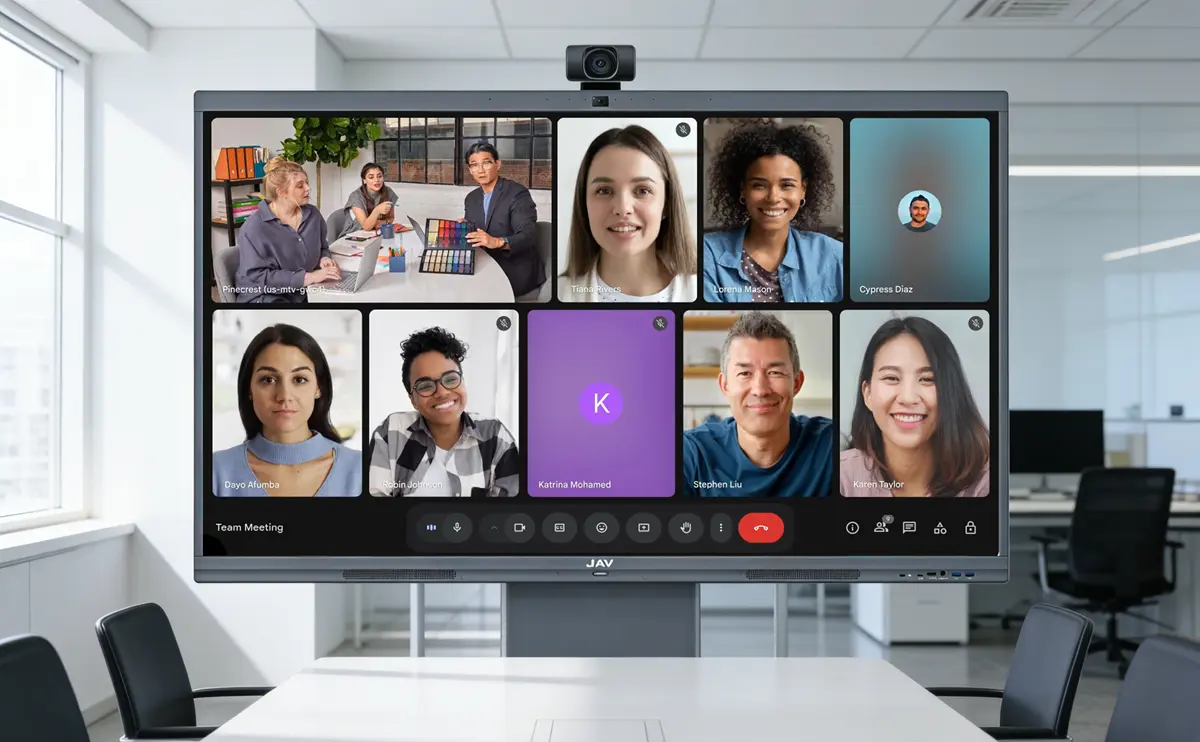
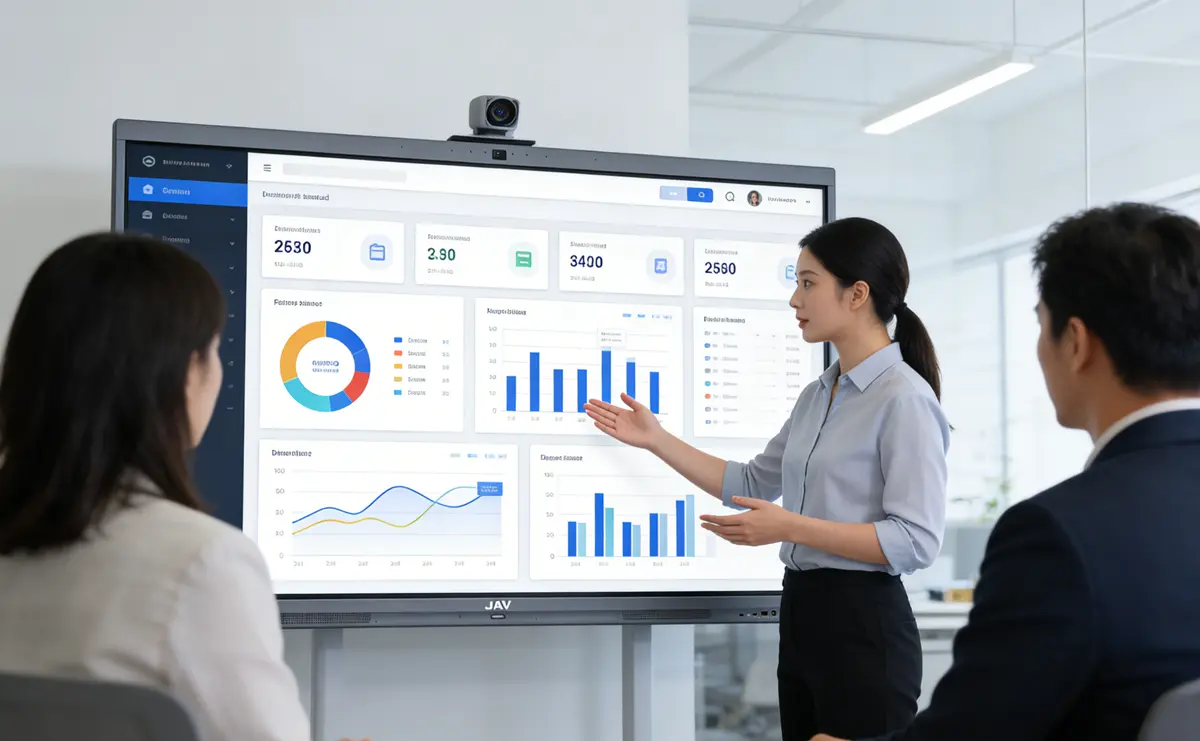
An interactive display redefines how team collaboration tools function in creative environments. Instead of separate tools for presenting, editing, and discussing, it combines everything into a single, interactive workspace.
Key advantages include:
- Live editing during presentations
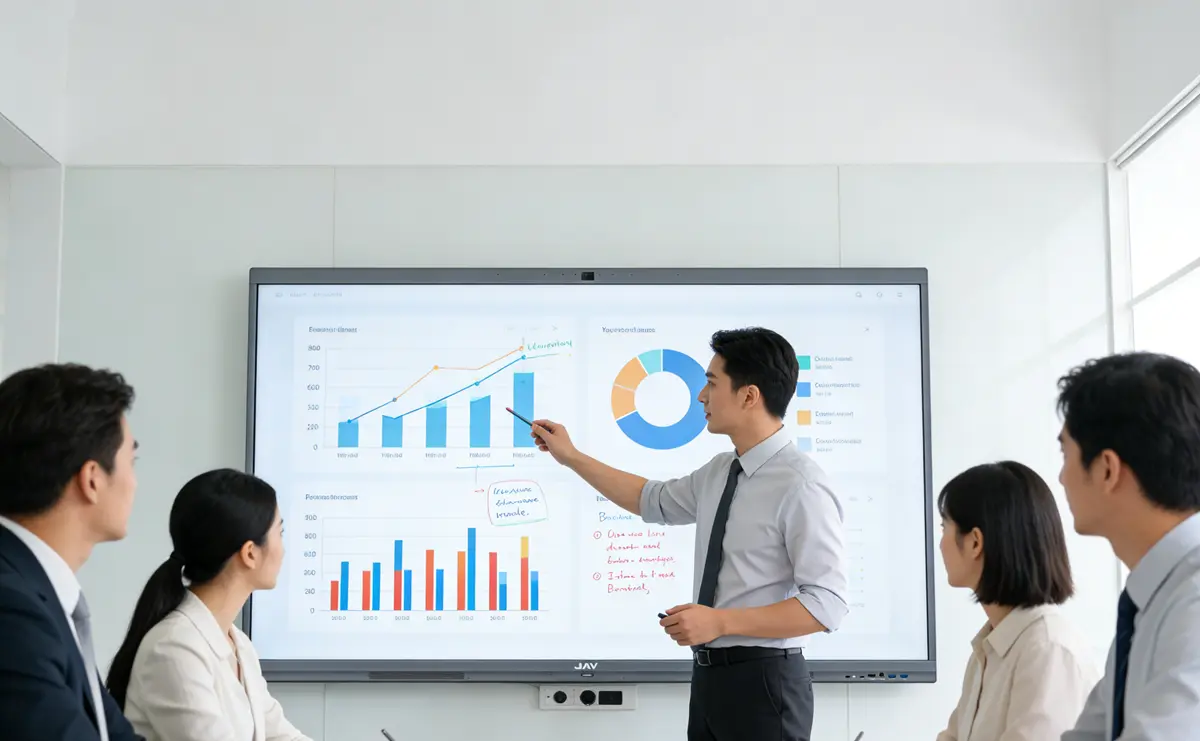
- Real-time client feedback and annotation
- Multi-user interaction on the same screen
- Seamless integration with design and presentation tools
In this sense, an interactive display is not just another device—it is a central hub for team collaboration tools, purpose-built for visual collaboration.
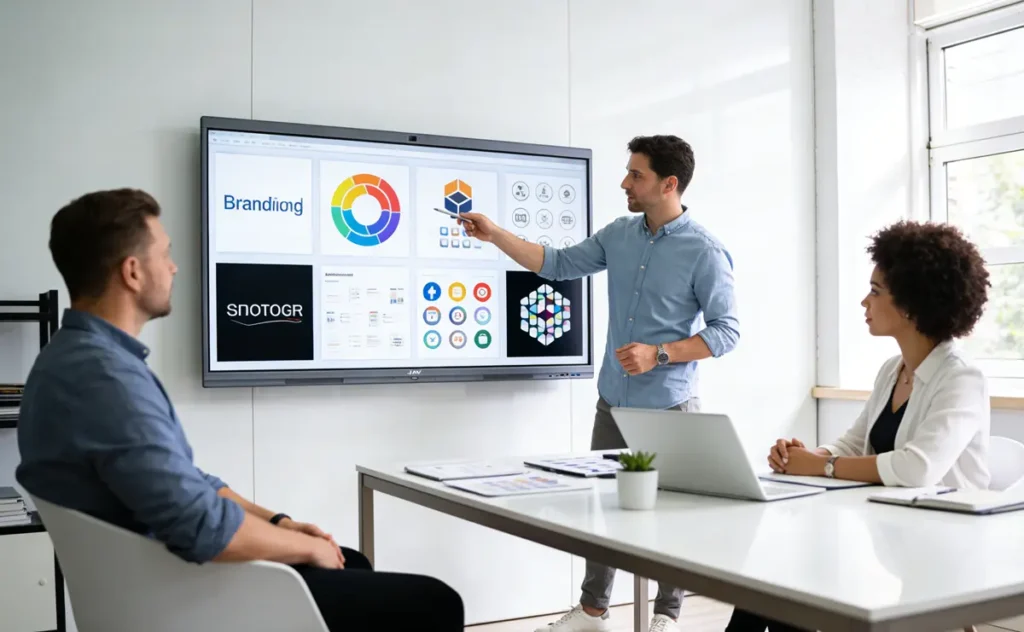
4. Mini Story: Team Collaboration Tools in Action at a Creative Agency
Imagine a creative agency presenting a new campaign concept.
Using traditional team collaboration tools, the team would present slides, take notes, and follow up later with revisions.
Now, with an interactive display:
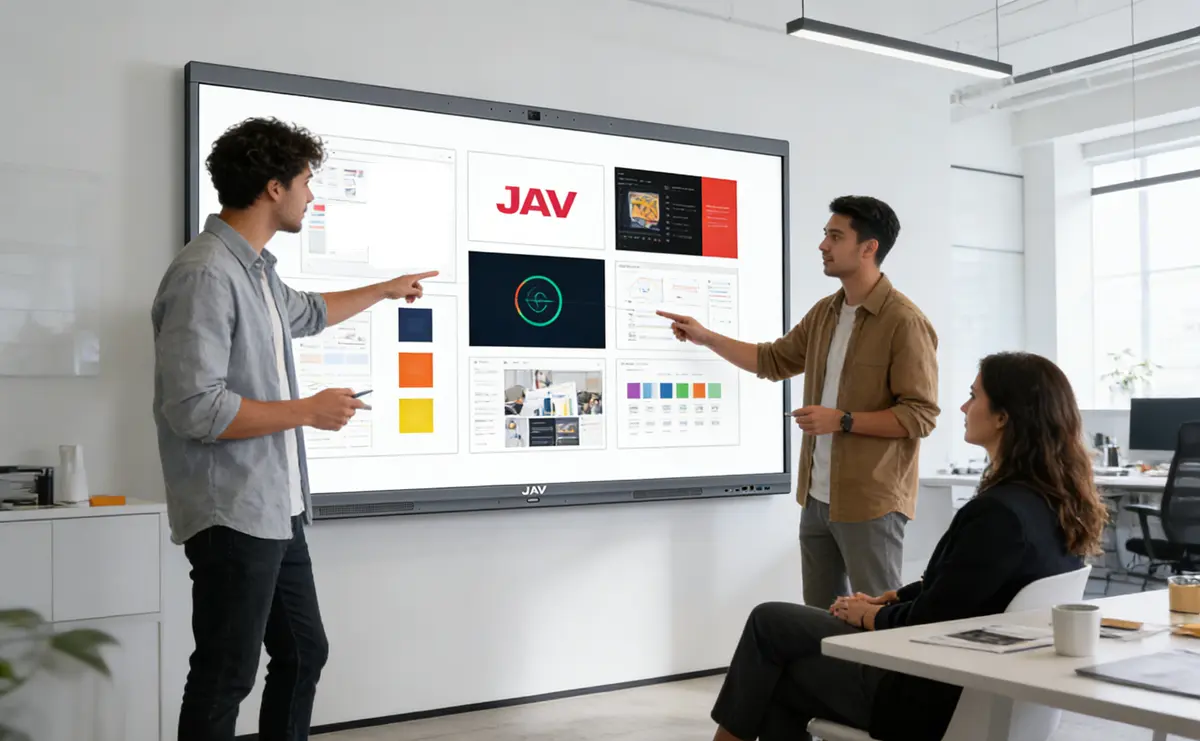
- The team presents initial visuals
- The client suggests adjustments immediately
- Designers update layouts in real time
- Everyone aligns on the final direction before the meeting ends
This transforms the meeting from a presentation into a working session—something traditional team collaboration tools struggle to achieve.
5. A Smarter Approach to Team Collaboration Tools: JAV Board 10 Interactive Display
To implement this upgraded approach to team collaboration tools, many creative agencies are turning to solutions like the JAV Board 10 インタラクティブ ディスプレイ.
It enhances collaboration by offering:
- 4K resolution for precise design presentation
- Multi-touch interaction for collaborative editing
- ワイヤレス画面共有 for flexible content input
- Android-based system for running essential collaboration apps
By consolidating multiple functions into one platform, it reduces reliance on fragmented team collaboration tools and creates a smoother, more efficient workflow.
6. ROI: Why Interactive Displays Improve Team Collaboration Tools Performance
When an interactive display becomes part of your team collaboration tools ecosystem, the impact is measurable:
- Faster client approvals
- Fewer revision cycles
- Shorter meeting durations
- Improved client engagement
- Higher project efficiency
For creative agencies, this directly translates into better resource utilization and increased client satisfaction.
結論
For creative agencies, upgrading team collaboration tools is not just about adding more software—it’s about choosing smarter solutions. An interactive display stands out as one of the most effective team collaboration tools, enabling real-time collaboration, clearer communication, and more impactful client presentations.
By redefining how teams and clients interact, it turns presentations into productive collaboration sessions—and that’s where real efficiency gains happen.