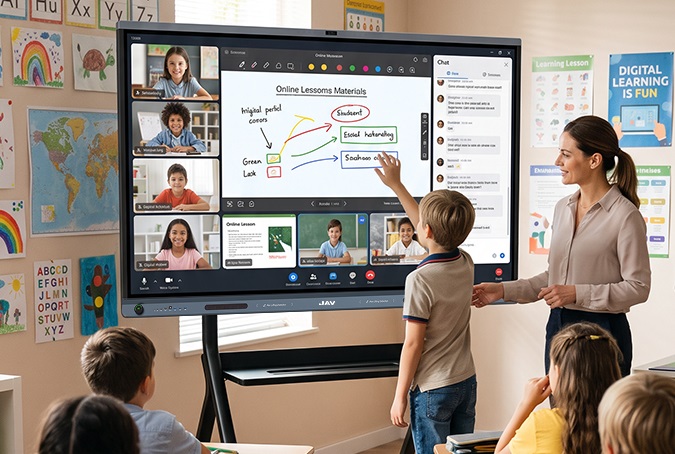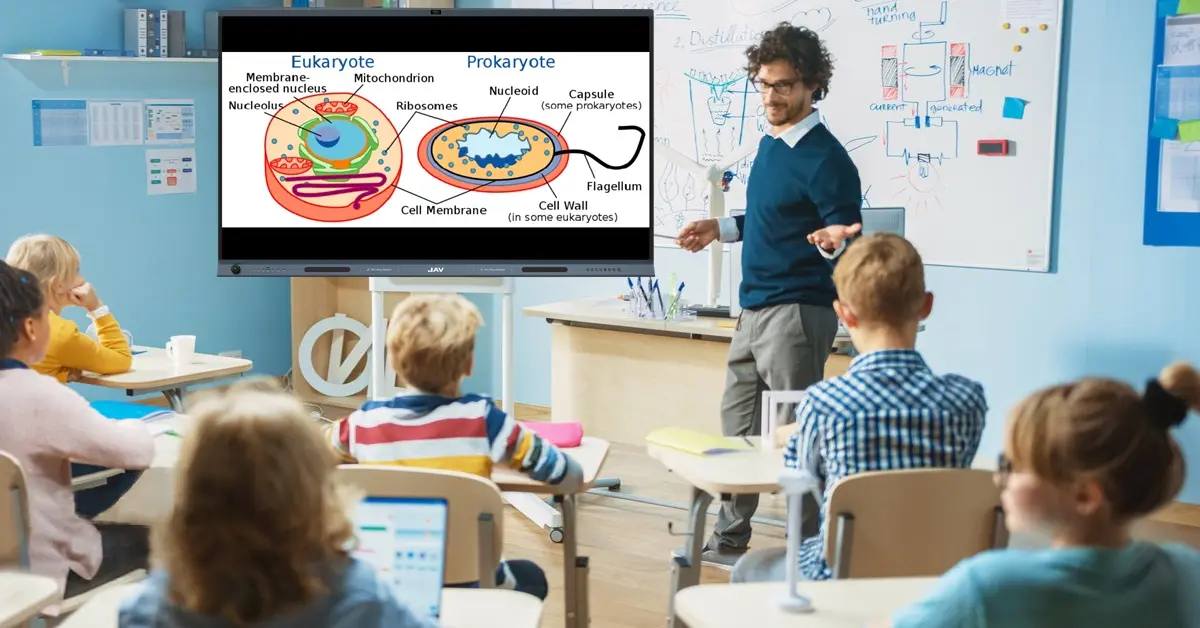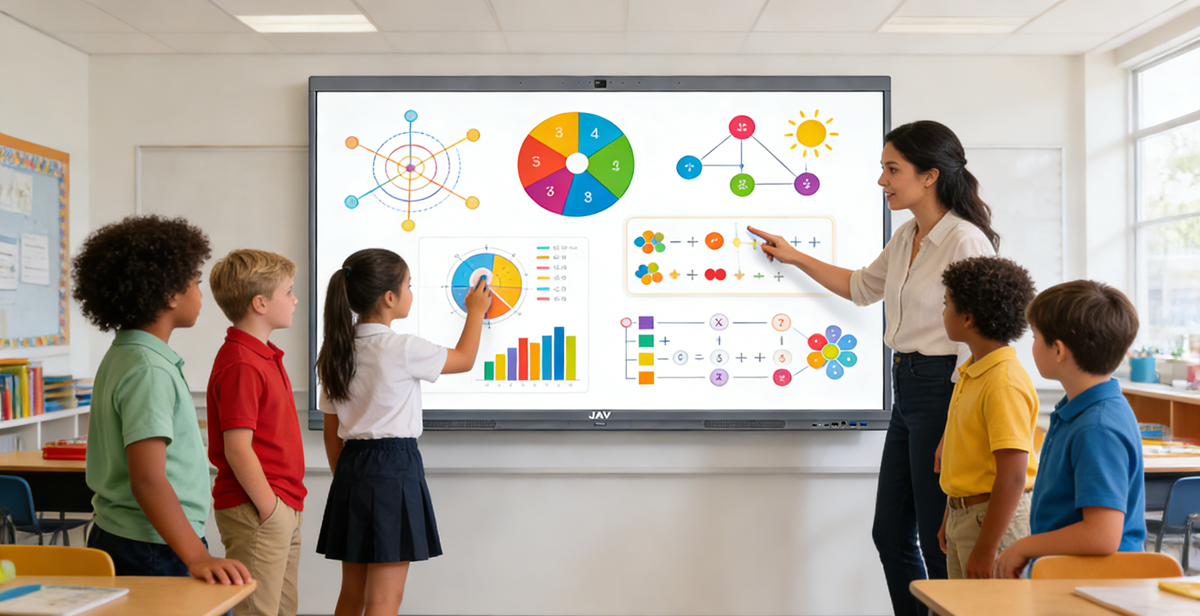
Visual learning plays a fundamental role in elementary education, where young students rely heavily on visual cues to understand new concepts and build foundational knowledge. As classrooms continue to evolve with digital technologies, the interactive whiteboard has become a central tool for delivering visual, engaging, and effective instruction.
Advanced interactive display solutions like the JAV Board 10 interactive whiteboard are designed to support modern elementary classrooms by combining large-format displays, touch interaction, and integrated software in a single platform. These capabilities make interactive whiteboards a powerful visual learning hub for teachers and students alike.
The Importance of Visual Learning in Elementary Education
In early education, students are still developing reading skills, attention spans, and abstract thinking abilities. Visual learning helps bridge these developmental stages by presenting information in a concrete and intuitive way.
Images, diagrams, charts, and animations allow students to grasp abstract ideas more easily. For example, visual number lines clarify math concepts, animated diagrams explain scientific processes, and maps help students understand geography and history. By reducing reliance on text alone, visual learning helps students focus on comprehension rather than decoding written information.
Visual approaches also support diverse learning needs. Combining visual content with verbal explanations and hands-on activities creates a multimodal learning environment that benefits all students.
How an Interactive Whiteboard Enhances Visual Learning in Elementary Classrooms
1. Making Abstract Concepts Visible and Concrete
Visual learning in elementary education is most effective when abstract ideas are transformed into concrete visual representations. Interactive whiteboards allow teachers to display diagrams, animations, and real-world examples, helping young learners connect concepts with visual cues rather than relying only on text or verbal explanations.
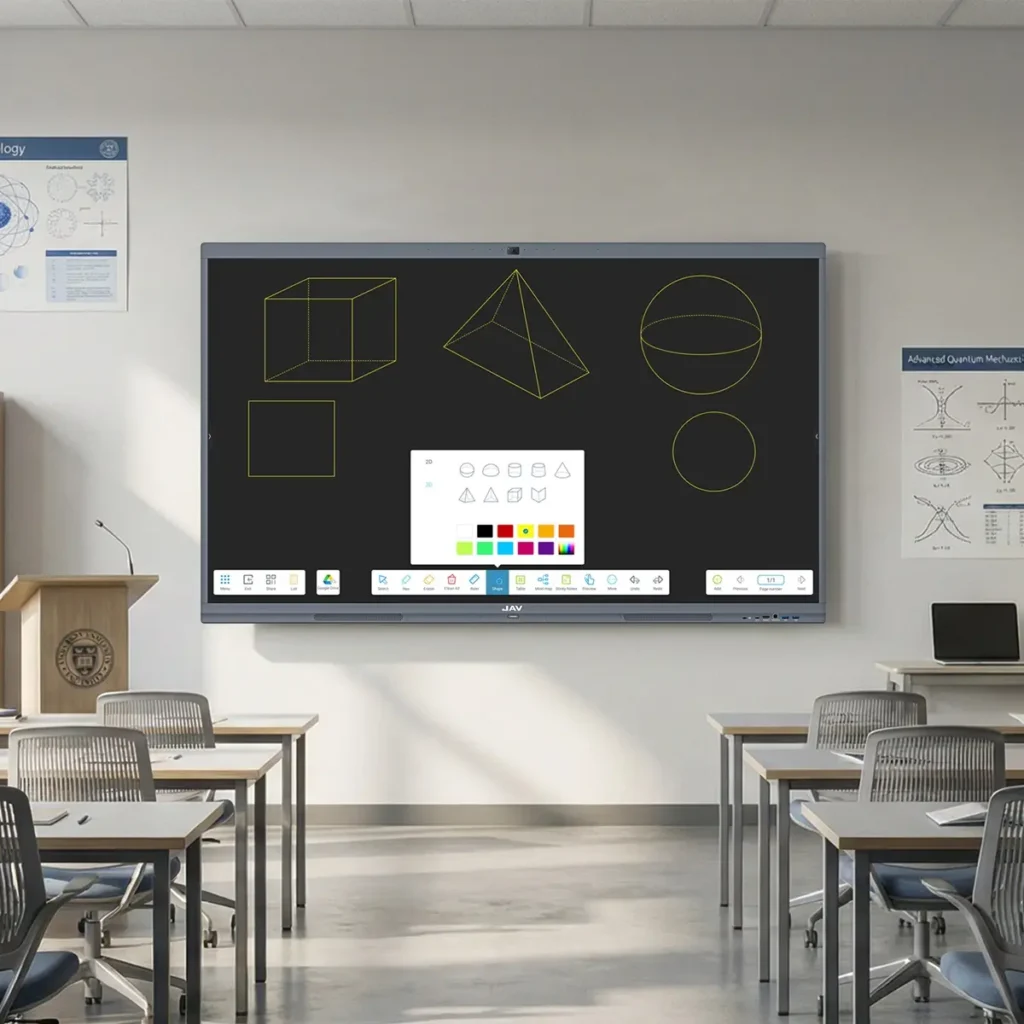
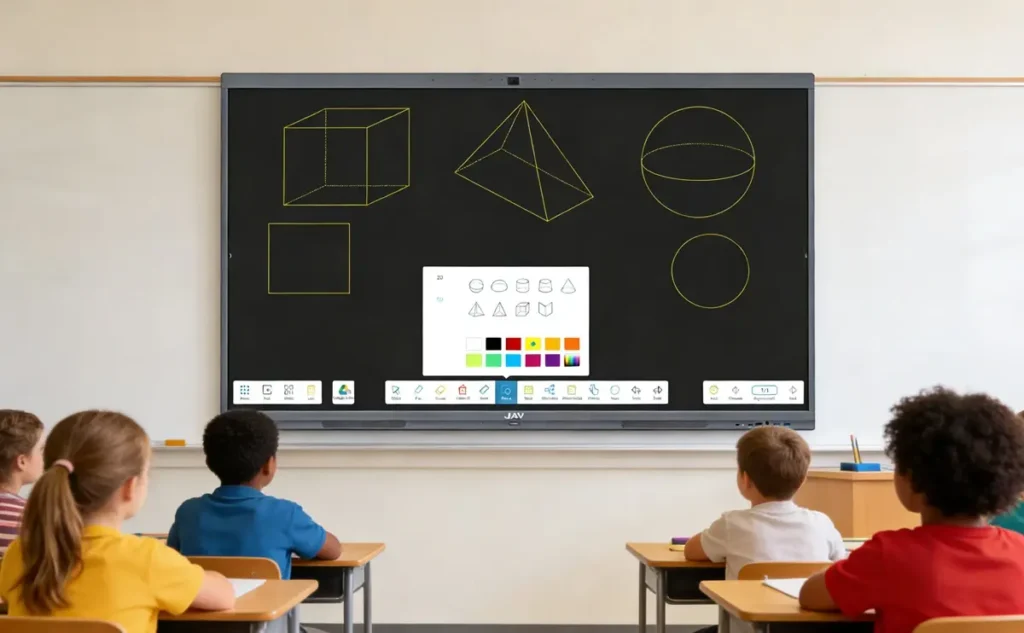
With an interactive teaching tool like the JAV Board 10 interactive whiteboard, teachers can present high-resolution images, videos, and interactive simulations directly on a large screen, ensuring every student can clearly see visual materials. The built-in annotation tools also allow teachers to highlight key elements, draw diagrams in real time, and break down complex ideas step by step.
2. Encouraging Active Participation Through Touch Interaction
Visual learning improves when students actively engage with visual content instead of passively watching it. Interactive whiteboards enable students to touch, drag, draw, and manipulate on-screen objects, which strengthens comprehension and memory retention.
The multi-touch capabilities of the JAV Board 10 allow multiple students to interact with the screen simultaneously. For example, students can drag labels onto diagrams, solve math problems on the board, or rearrange sentence structures in language lessons, turning visual learning into a hands-on experience.
3. Supporting Multimedia-Based Learning Experiences
Elementary learners process information better when visuals are combined with audio and motion. Interactive whiteboards support multimedia learning by integrating videos, animations, and interactive applications into daily lessons, making content more engaging and easier to understand.
JAV Board 10 runs on Android with Google EDLA certification, enabling teachers to open YouTube, Google Slides, educational apps, and interactive content without connecting an external computer. This seamless access to multimedia resources helps teachers deliver visually rich lessons with minimal setup time.
4. Facilitating Real-Time Feedback and Visual Explanation
Immediate visual feedback helps young learners correct mistakes and understand concepts more clearly. Interactive whiteboards allow teachers to annotate, highlight, and demonstrate problem-solving processes in real time, making thinking visible for students.
Using the JAV Board 10’s annotation and screen recording tools, teachers can visually explain solutions, underline important points, and save lesson content for review. This supports differentiated instruction and helps students revisit visual explanations after class.
5. Enhancing Collaboration and Group Learning
Visual learning is amplified when students collaborate around shared visual content. Interactive whiteboards provide a central display for group activities, discussions, and collaborative problem-solving, encouraging communication and teamwork.
With wireless screen sharing and built-in collaboration tools, JAV Board 10 allows students and teachers to share content from tablets or laptops instantly. This makes it easy to compare student work, display group projects, and create a visually collaborative classroom environment.
Why JAV Board 10 Interactive Whiteboard Is Designed for Elementary Visual Learning
Unlike traditional projectors or static whiteboards, JAV Board 10 is designed specifically for modern classrooms. Its large 4K display ensures clear visibility from any seat, while intuitive touch controls make it accessible even for young students. Teachers benefit from quick startup, integrated educational apps, and flexible mounting options for different classroom layouts.
結論
Interactive whiteboards are redefining visual learning in elementary education. By combining high-resolution displays, multimedia integration, annotation tools, and touch-based interaction, they create an immersive and effective learning environment for young students.
Solutions like the JAV Board 10 interactive whiteboard demonstrate how interactive display technology can support modern teaching practices, enhance student engagement, and contribute to stronger learning outcomes in elementary classrooms. As visual learning continues to shape early education, interactive whiteboards will remain a core component of future-ready classrooms.
Upgrade Your Classroom with a Powerful Interactive Whiteboard
Visual learning is transforming elementary education—and the right technology makes all the difference.
Discover how solutions like the JAV Board 10 インタラクティブホワイトボード can help your school improve engagement, enhance visual teaching, and support diverse learning styles.
👉 Explore JAV Interactive Whiteboard Solutions for K–5 Classrooms
[Learn More / Request a Demo]
FAQ:
❓ What is an interactive whiteboard in elementary education?
An interactive whiteboard is a large digital display that allows teachers and students to interact with content using touch, pens, or gestures. It combines traditional whiteboard functions with multimedia, internet access, and collaboration tools, making it a central teaching hub in modern classrooms.
❓ How does an interactive whiteboard support visual learning?
An interactive whiteboard enhances visual learning by displaying images, videos, diagrams, animations, and digital textbooks on a large screen. Teachers can annotate content in real time, and students can interact directly with visual materials, improving comprehension and retention.
❓ Why are interactive whiteboards important for K–5 classrooms?
Young learners benefit greatly from visual and interactive content. Interactive whiteboards help teachers explain abstract concepts visually, engage students through touch-based activities, and support multiple learning styles, including visual, auditory, and kinesthetic learners.
❓ What features should schools look for in an interactive whiteboard?
Schools should consider screen size, 4K resolution, multi-touch capability, built-in operating system, wireless screen sharing, annotation tools, and compatibility with educational apps. Solutions like the JAV Board 10 offer these features in an all-in-one classroom-ready platform.
❓ How does the JAV interactive whiteboard improve classroom engagement?
The JAV interactive whiteboard enables students to participate directly on the screen, collaborate on group tasks, and interact with digital content. This hands-on experience increases attention, motivation, and classroom collaboration.
❓ Can interactive whiteboards benefit non-visual learners too?
Yes. While visual learners benefit the most, interactive whiteboards also support auditory learners through multimedia and kinesthetic learners through touch interaction. This makes them ideal for multimodal teaching in K–12 education.