家 » Meeting Room Solutions » Why an Interactive Whiteboard Is the Best Conference Room Solution for Modern Teams
目次
- 共有
フェイスブック
リンクトイン
Why an Interactive Whiteboard Is the Best Conference Room Solution for Modern Teams
Modern organizations need more than a projector, a TV screen, or a basic video conferencing setup. As hybrid work, digital collaboration, and fast decision-making become part of daily business operations, choosing the right conference room solution is now essential for improving meeting productivity.
Traditional conference room equipment often creates problems such as slow setup, limited interaction, disconnected remote participants, and scattered meeting notes. A modern meeting space should allow teams to present, annotate, share, discuss, and follow up without switching between multiple devices.
This is why an interactive whiteboard for conference room collaboration has become one of the most practical and effective solutions for businesses. Instead of relying on separate screens, cameras, speakers, cables, and whiteboards, companies can use an all-in-one interactive display to simplify meeting room setup and improve collaboration.
For organizations looking for a smarter and more integrated conference room solution, the JAV Board 10 インタラクティブホワイトボード offers a practical answer. By combining display, touch control, wireless sharing, video conferencing, annotation, and digital whiteboarding into one device, the JAV Board helps companies create smarter, more efficient, and more engaging meeting rooms.
What Makes a Good Conference Room Solution?
A strong conference room solution should do more than simply display content. It should support the full meeting process, from preparation to presentation, collaboration, and follow-up.
For modern businesses, an effective conference room solution should include:
- Easy wireless screen sharing from laptops, tablets, and smartphones
- Real-time annotation and interactive collaboration
- Support for hybrid meetings and remote participants
- Compatibility with popular video conferencing platforms
- Digital whiteboarding and note-saving functions
- Simple setup with fewer cables and fewer external devices
- Smooth integration with daily business workflows
When these functions are separated across different devices, meetings often become slower and less productive. When they are integrated into one interactive display, the meeting experience becomes much more efficient.
Why Traditional Conference Room Setups Are No Longer Enough
Many conference rooms still rely on projectors, TVs, external cameras, speakers, cables, and separate whiteboards. While these tools may work for basic presentations, they are often not enough for modern collaboration.
Traditional conference room setups usually have several limitations:
- Projectors may have low brightness, poor image clarity, and complicated setup
- TVs are good for displaying content but lack interactive features
- Physical whiteboards cannot easily save or share meeting notes
- External devices often require extra cables and technical support
- Remote participants may feel disconnected from in-room discussions
- Meeting records are often scattered across notebooks, screenshots, and chat tools
These issues can reduce engagement and slow down decision-making. Businesses that want a smarter conference room solution need a system designed for both in-person and hybrid collaboration.
Why an Interactive Whiteboard for Conference Room Collaboration Works Better
An interactive whiteboard for conference room use brings multiple meeting tools into one integrated platform. Instead of only showing slides, teams can interact with content directly on the screen.
With the JAV Board, participants can write, draw, annotate, brainstorm, open files, share screens, and save meeting content digitally. This turns the conference room from a passive presentation space into an active collaboration environment.
For teams that need faster communication and more productive discussions, this type of interactive whiteboard offers a clear advantage over traditional meeting room equipment.
Real-Time Collaboration for Better Meeting Engagement
In many traditional meetings, one person controls the presentation while others listen passively. This often leads to low engagement and missed ideas.
The JAV Board changes this by allowing multiple participants to interact with the screen in real time. Team members can annotate documents, highlight key points, draw diagrams, and edit ideas directly during the meeting.
This is especially useful for:
- Business strategy discussions
- Project planning
- Product development meetings
- Training sessions
- Sales presentations
- Design reviews
- Consulting workshops
By making every participant part of the discussion, the JAV Board helps transform the conference room into a more collaborative and productive workspace.
A Better Conference Room Solution for Hybrid Meetings
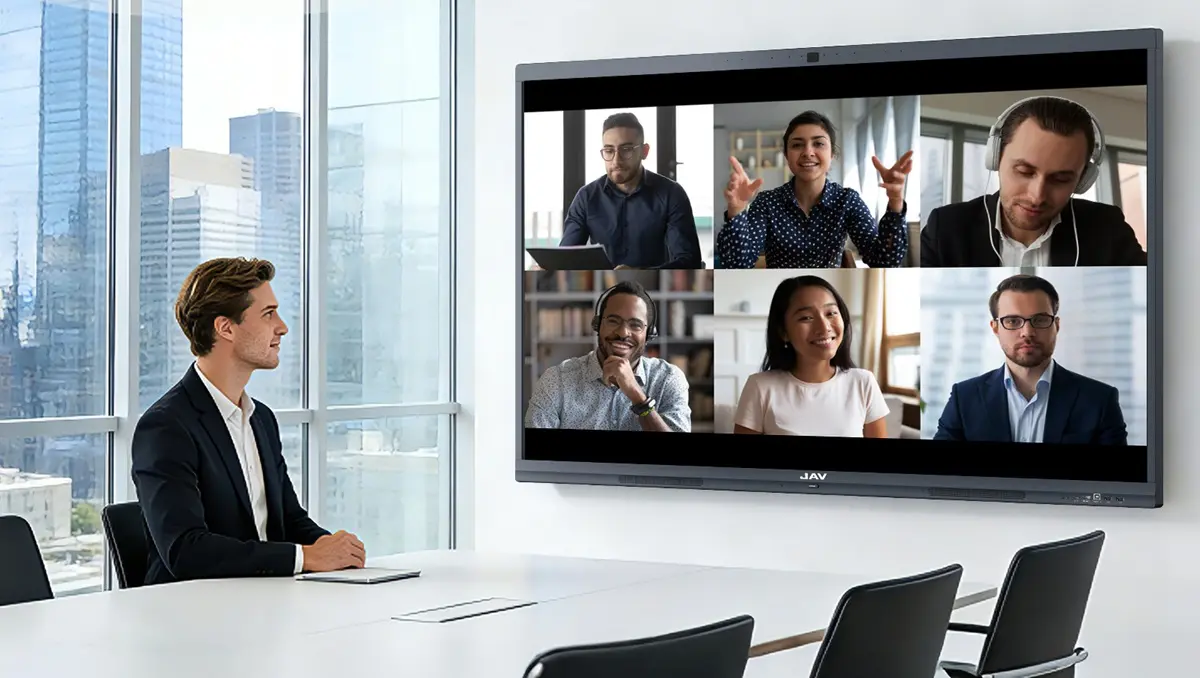
Hybrid meetings are now common, but they can be difficult when remote and in-room participants are not connected equally. Remote attendees may not clearly see whiteboard content, follow annotations, or contribute to the discussion in real time.
The JAV Board provides a more effective conference room solution for hybrid teams by supporting wireless screen mirroring, real-time annotation, video conferencing, and digital file sharing.
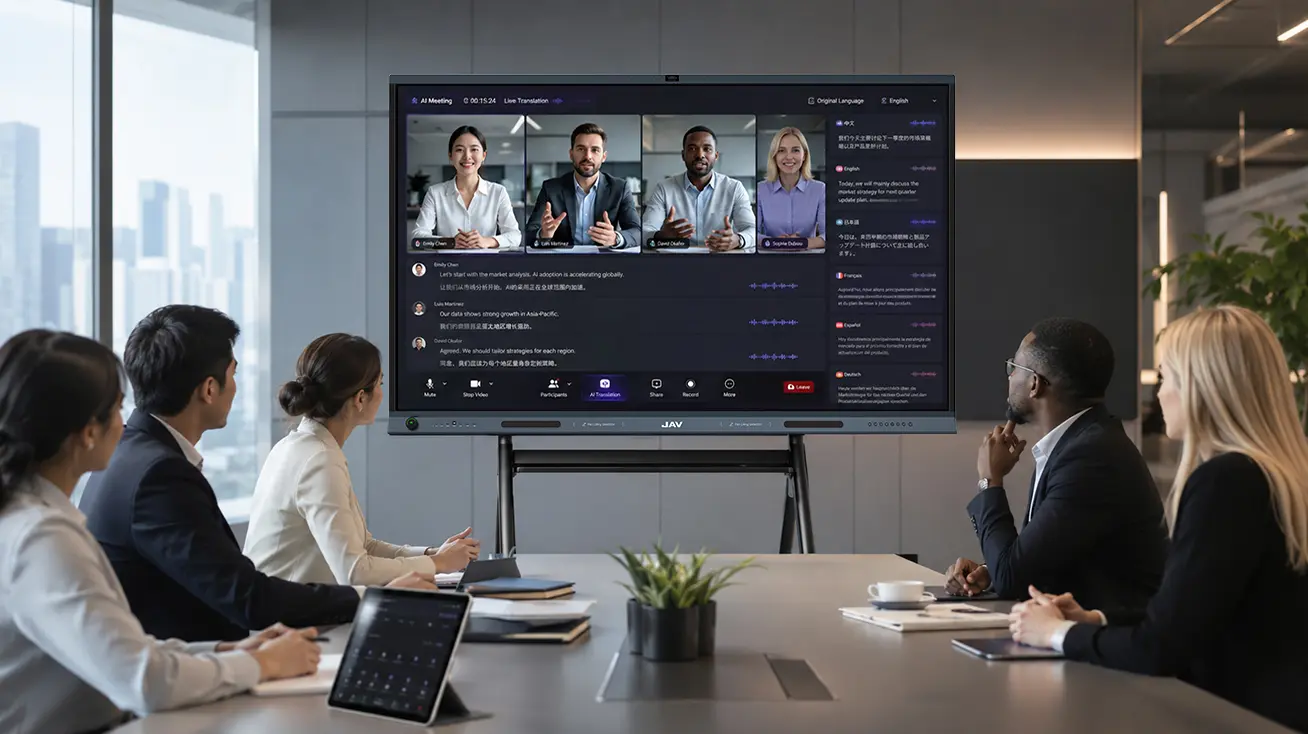
Teams can use the JAV Board with commonly used conferencing platforms such as Zoom and Microsoft Teams. During meetings, users can present content, annotate important details, and share meeting notes with both local and remote participants.
This helps remote attendees stay involved and ensures that everyone can follow the same discussion, no matter where they are located.
Reduce Technical Friction and Save Meeting Time
A major problem with traditional conference room equipment is technical friction. Before a meeting starts, teams may need to connect HDMI cables, adjust projectors, switch input sources, test audio devices, or troubleshoot screen sharing issues.
These small problems can waste time and interrupt the meeting flow.
The JAV Board simplifies the setup by combining key meeting functions into one interactive display. With wireless connectivity, touch control, built-in collaboration tools, and compatibility with business software, teams can start meetings faster and focus on discussion instead of equipment.
For companies that hold frequent meetings, reducing setup time can make a significant difference in overall productivity.
Streamline Digital Workflows Before, During, and After Meetings
A modern conference room solution should not only support the meeting itself. It should also help teams manage information before and after the meeting.
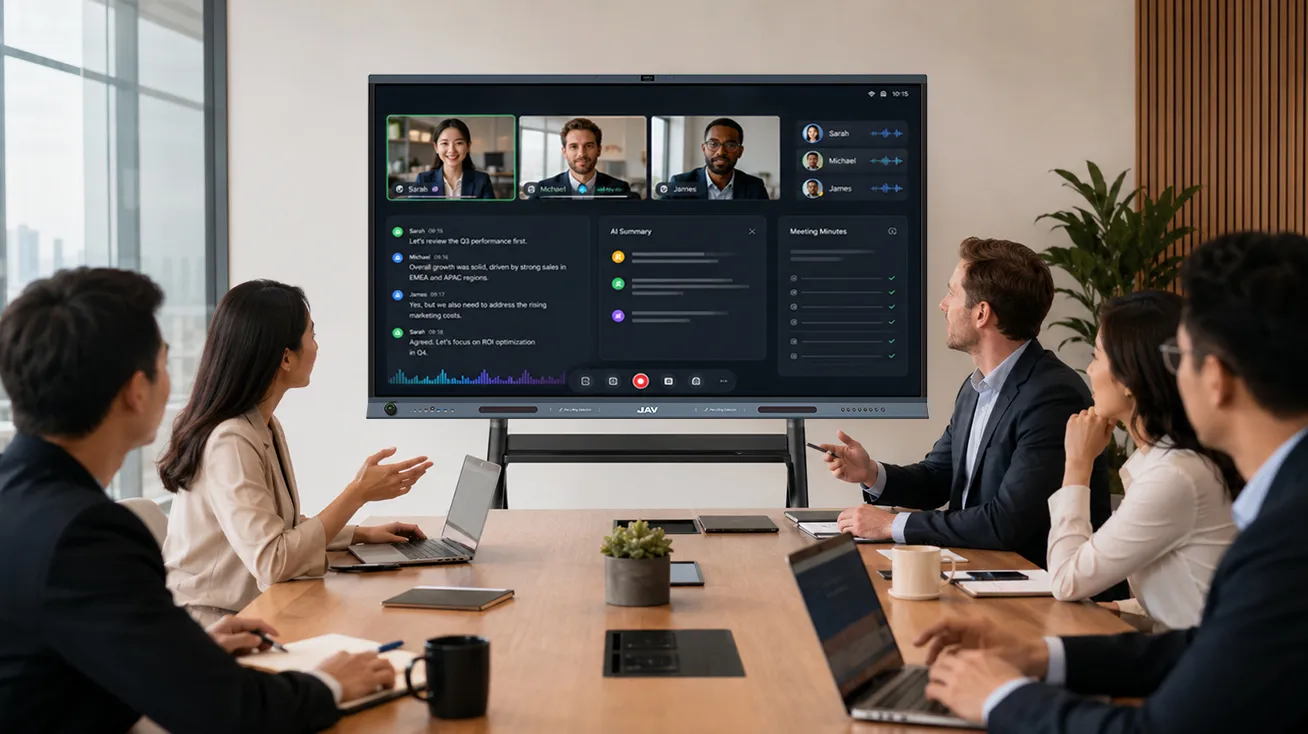
With the JAV Board, users can open documents, annotate presentations, create digital whiteboard notes, save meeting content, and share files through cloud-based workflows. Instead of taking photos of a physical whiteboard or rewriting meeting notes manually, teams can keep important information in digital format.
This makes follow-up easier and helps reduce information loss after meetings.
For businesses that depend on fast decisions and clear communication, this digital workflow integration is one of the biggest advantages of using an interactive whiteboard for conference room collaboration.
Interactive Whiteboard vs Traditional Conference Room Solutions
| Feature | Projector | TV Display | Traditional Whiteboard | JAVボード |
|---|---|---|---|---|
| 4K Visual Display | Limited | Yes | No | Yes |
| Touch Interaction | No | No | Yes, but offline | Yes |
| Digital Annotation | No | Limited | No | Yes |
| ワイヤレス画面共有 | Limited | Limited | No | Yes |
| Video Conferencing Support | Requires extra devices | Requires extra devices | No | Yes |
| Save and Share Notes | No | No | No | Yes |
| Hybrid Meeting Support | Limited | Limited | No | Yes |
| All-in-One Meeting Workflow | No | No | No | Yes |
Compared with traditional tools, the JAV Board offers a more complete and integrated conference room solution. It is not just a display. It is a collaboration platform designed for modern meeting spaces.
Why Businesses Choose JAV Board as Their Conference Room Solution
The JAV Board is designed for business teams that need a smarter, simpler, and more interactive meeting experience. It helps companies replace multiple disconnected devices with one all-in-one interactive display.
Businesses choose JAV Board because it supports:
- Interactive whiteboarding
- Real-time annotation
- ワイヤレス画面共有
- Hybrid meeting collaboration
- Digital note saving and sharing
- Smooth presentation workflows
- Compatibility with popular meeting platforms
- A cleaner and more professional conference room setup
Whether used in executive meeting rooms, training rooms, team collaboration spaces, or hybrid work environments, the JAV Board helps organizations improve communication and meeting efficiency.
よくある質問
What is the best conference room solution for modern businesses?
The best conference room solution should support presentation, collaboration, video conferencing, wireless sharing, and digital workflows. An interactive whiteboard such as the JAV Board is a strong choice because it combines these functions into one device.
Why choose an interactive whiteboard for conference room collaboration?
An interactive whiteboard for conference room collaboration allows teams to write, annotate, share, and save content in real time. It improves engagement and helps both in-room and remote participants collaborate more effectively.
How does the JAV Board improve meeting productivity?
The JAV Board improves meeting productivity by reducing setup time, supporting wireless screen sharing, enabling real-time annotation, and allowing teams to save and share meeting notes digitally.
Can the JAV Board be used for hybrid meetings?
Yes. The JAV Board supports hybrid meetings by combining interactive display features, wireless connectivity, annotation tools, and compatibility with popular video conferencing platforms.
Is an interactive whiteboard better than a projector for conference rooms?
For modern collaboration, an interactive whiteboard is usually more effective than a projector. A projector mainly displays content, while an interactive whiteboard allows users to touch, write, annotate, share, and save meeting content.
Conclusion: JAV Board Is a Smarter Conference Room Solution
As businesses move toward more collaborative and hybrid ways of working, traditional meeting room tools are no longer enough. Companies need a conference room solution that supports clear communication, real-time collaboration, efficient setup, and digital workflow integration.
The JAV Board brings these capabilities together in one interactive display. As an interactive whiteboard for conference room collaboration, it helps teams present ideas, engage participants, connect remote attendees, and manage meeting content more effectively.
For organizations looking to upgrade their meeting spaces, the JAV Board is a smarter, more efficient, and future-ready conference room solution.